
 Business License

What Is a Disposable Razor: A Complete Introduction for B2B Buyers
A distributor in Eastern Europe placed an order for roughly 50,000 disposable razors some time ago. The shipment arrived on schedule, but the buyer rejected the entire container. The reason was not a defect in the blades or handles. The razors were perfectly functional. What went wrong was a mismatch in blade count: the buyer expected twin-blade units but received single-blade models. The product description on the supplier's website had been vague about the specification, and neither side caught the discrepancy until the goods were already at port. This kind of misunderstanding happens more often than many importers realize, and it starts with a surprisingly basic gap: not everyone in the supply chain shares the same definition of what a disposable razor actually is.
For B2B buyers, knowing the category inside out is not academic. It directly affects order accuracy, product compliance, cost control, and end-user satisfaction. This article walks through every layer of the disposable razor category: how they are defined, what components they contain, how types differ by blade count and head design, which materials are commonly used, and what quality indicators matter most when sourcing in bulk.
1. What Exactly Is a Disposable Razor?
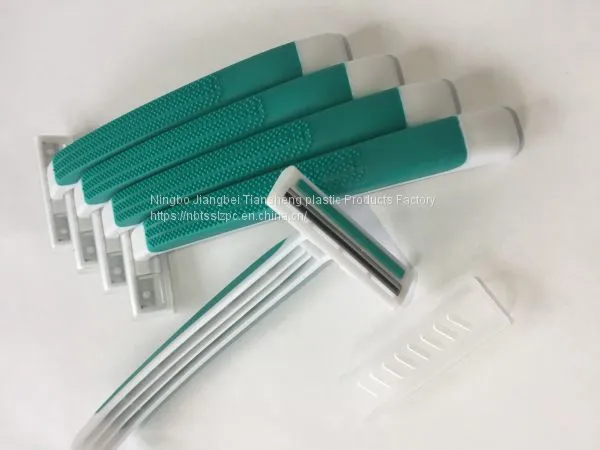
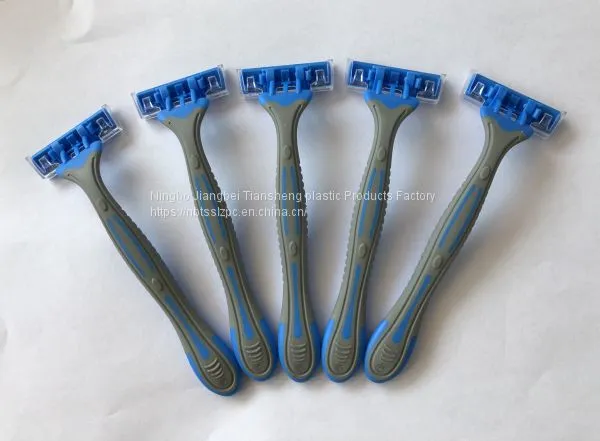
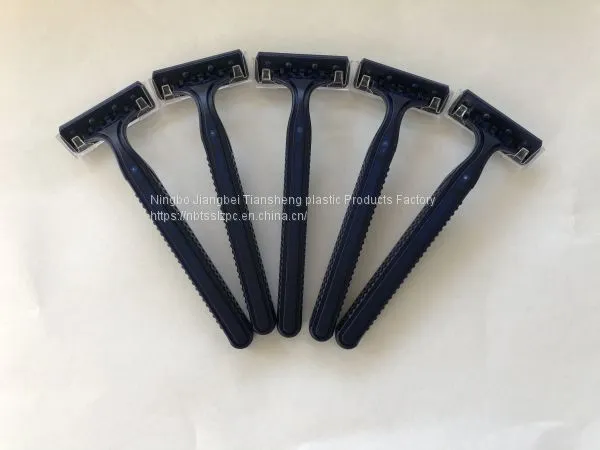
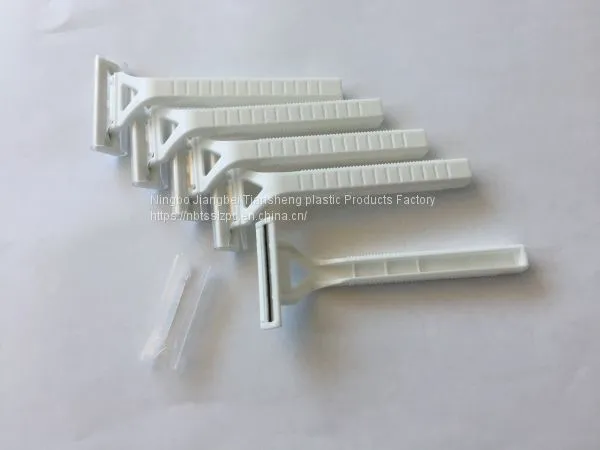
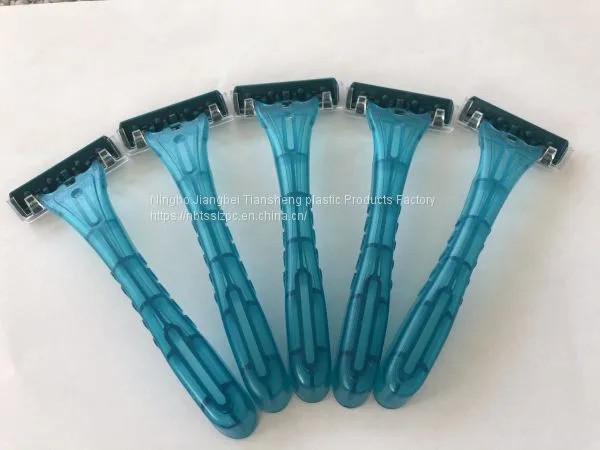
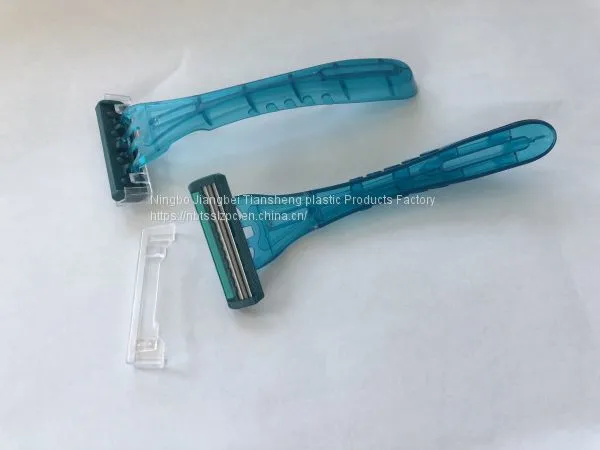
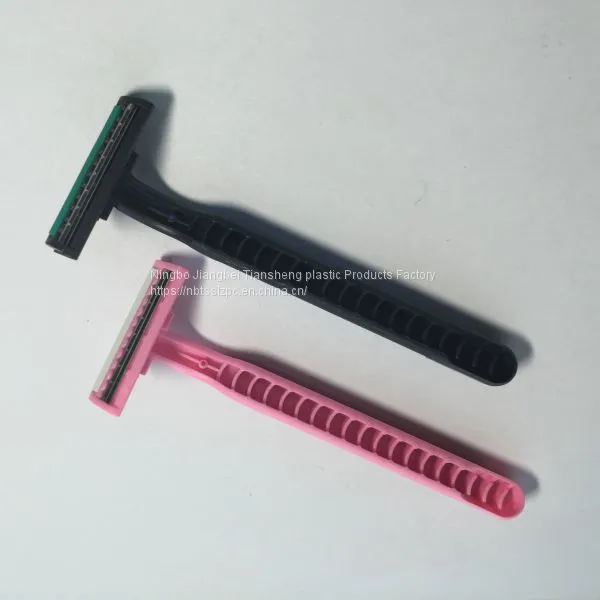
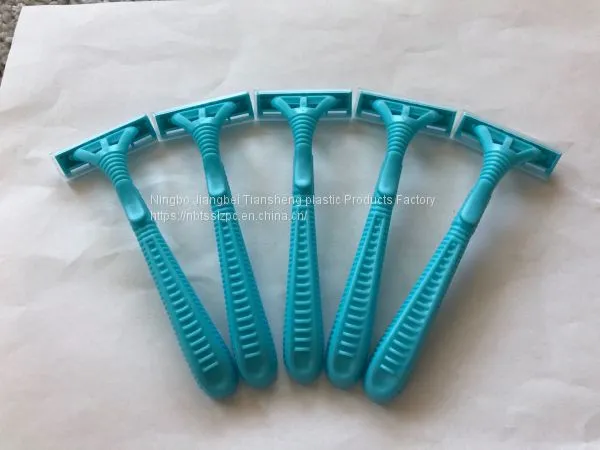
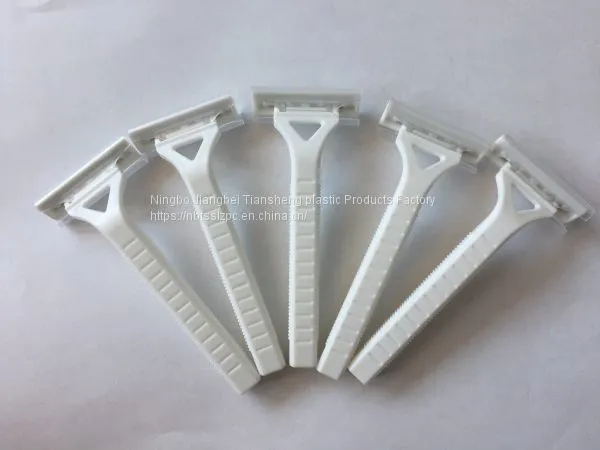
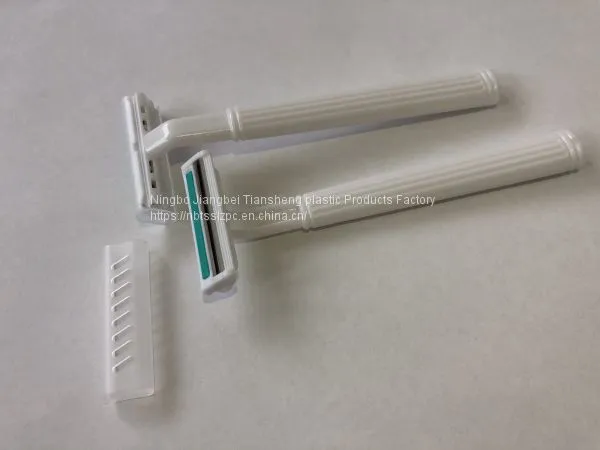
A disposable razor is a single-use or limited-use shaving tool in which the blade and handle form one integrated unit. Unlike cartridge razors, where the user keeps the handle and swaps out blade cartridges, a disposable razor is discarded in its entirety once the blade dulls or the product reaches the end of its intended service life. The entire unit is typically made from plastic, rubber, and stainless steel components, with a lubricating strip bonded to the head on most modern designs.
The defining characteristic that separates a disposable razor from other shaving tools is the non-replaceable blade. Once the cutting edge loses its sharpness, the whole product is thrown away. This design choice has direct implications for cost structure, material selection, and manufacturing complexity. From a B2B standpoint, it also affects unit pricing, shipping weight, and environmental compliance considerations that vary by destination market.
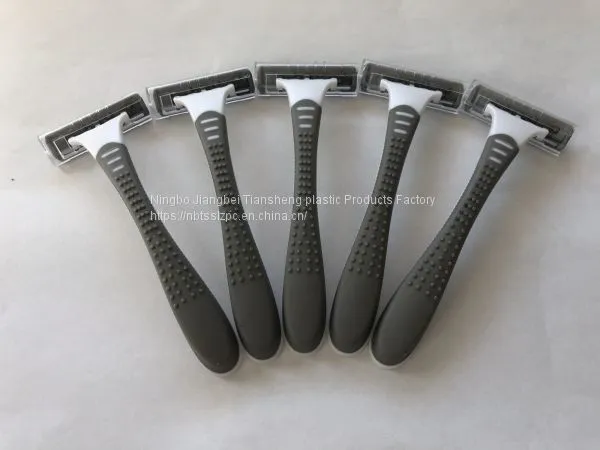
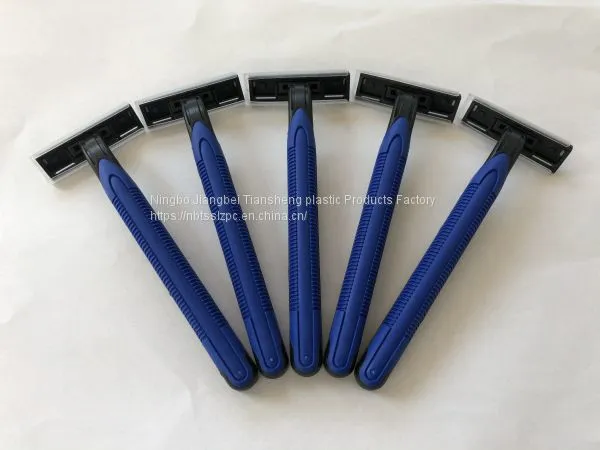
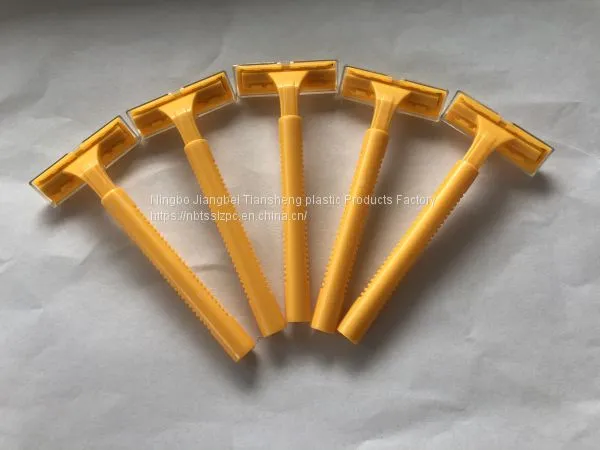
In practice, the term "disposable razor" covers a wide range of products. Some are designed to last a single shave, while others can deliver roughly five to ten uses before the blade degrades noticeably. The handle may be a simple flat piece of molded plastic or a contoured rubber grip with textured surfaces. These variations mean that two products both labeled "disposable razor" can serve entirely different market segments and carry significantly different price points.
2. Key Components of a Disposable Razor
A disposable razor may look like a simple product, but it contains several precisely engineered components. Understanding these parts helps B2B buyers evaluate samples, compare supplier quotations, and communicate specifications clearly.
Before listing the components, it is worth noting that each part involves its own cost drivers and quality variables. A change in blade steel grade, for example, can shift the unit cost by roughly 10 to 15 percent while affecting shaving comfort and perceived product quality.
| Component | Typical Material | Function | Key Quality Indicator |
|---|---|---|---|
| Blade | Stainless steel (typically 420 or 440 grade) | Cutting hair at the skin surface | Edge sharpness, corrosion resistance, coating uniformity |
| Handle | Polypropylene (PP), polystyrene (PS), or ABS | Providing grip and structural support | Rigidity, surface finish, absence of flash or burrs |
| Lubricating strip | Water-soluble polymer with additives (aloe, vitamin E) | Reducing friction between blade and skin | Adhesion to head, ingredient quality, dissolution rate |
| Pivot mechanism | Spring steel or plastic hinge | Allowing the head to tilt with facial contours | Smooth movement, return force, durability over multiple strokes |
| Blade guard / comb | Plastic or rubber | Positioning skin ahead of the blade edge | Uniform spacing, secure attachment, no sharp edges |
| Head housing | ABS or similar rigid plastic | Holding blades in fixed alignment | Dimensional accuracy, weld or snap-fit integrity |
Some manufacturers integrate additional features such as a moisturizing reservoir above the lubricating strip or a rubber fin below the blade guard for skin stretching. Each added feature increases the bill of materials and molding complexity, so buyers should confirm whether these extras justify the incremental cost for their target market.
3. Types of Disposable Razors by Blade Count
Blade count is the most visible spec that distinguishes one disposable razor from another. The market offers four common configurations, summarized below.
| Blade Count | Typical Use Case | Cost Level | Key Trade-off |
|---|---|---|---|
| Single blade | Budget retail, institutional supply | Lowest | Lowest cost, but more strokes required and higher nick risk |
| Twin blade | Hotels, promotions, mid-tier retail | Low to moderate | Best cost-performance balance; roughly 40-50% of global trade volume |
| Triple blade | Premium retail, sensitive-skin segment | Moderate to high | Smoother shave, but noticeably higher unit cost |
| Four blade | Developed markets, cartridge-alternative segment | Highest | Incremental smoothness for heavy beards; marginal benefit beyond three blades is debated |
Each configuration has a distinct performance profile and target user segment. The twin-blade format represents the volume sweet spot for many B2B buyers because it balances performance and cost effectively across the widest range of applications.
4. Types by Head Design: Fixed vs Pivoting
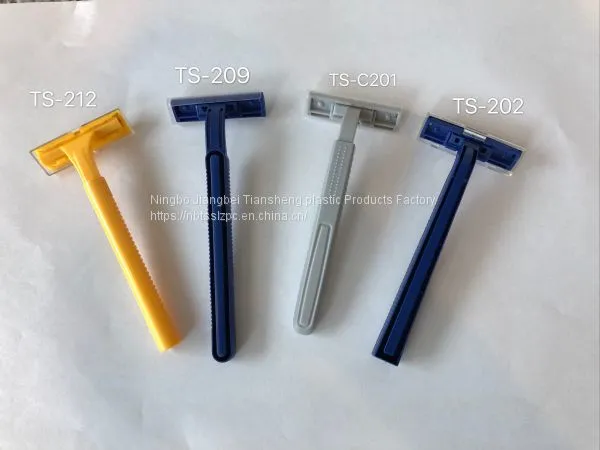
Beyond blade count, the head mechanism determines how the razor interacts with facial contours. Fixed-head razors keep the blade assembly rigidly aligned with the handle. The user must manually adjust the angle to follow the curves of the jaw, chin, and neck. Fixed-head designs are simpler to manufacture, have fewer failure points, and cost less per unit. They dominate the economy and mid-range segments.
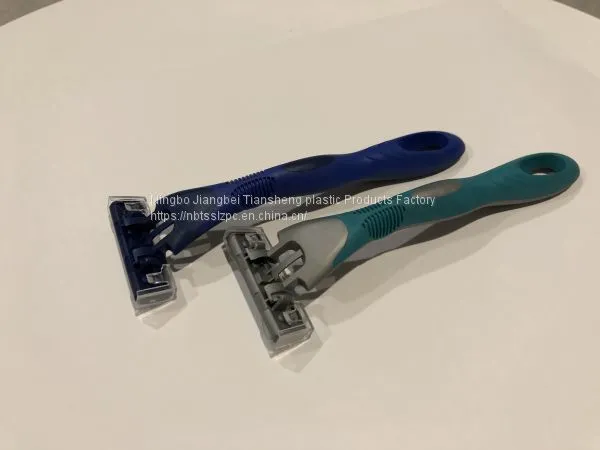
Pivoting-head razors incorporate a hinge or ball joint that allows the blade cartridge to tilt as it moves across the skin. This articulation helps maintain consistent blade-to-skin contact around curved areas, reducing the likelihood of nicks on the jawline and under the nose. The pivot mechanism adds roughly two to four additional injection-molded parts and a small spring element. For B2B buyers, this means a higher unit price but also a product that competes more credibly against cartridge-system alternatives in retail settings.
The choice between fixed and pivoting heads should align with the buyer's distribution channel. A fixed-head twin-blade razor works well for hotel bathrooms and promotional giveaways, where the user expectation is basic functionality. A pivoting-head triple-blade model belongs in pharmacy and supermarket aisles where the consumer compares it side by side with branded cartridge products.
5. Handle Materials and Design Variations
The handle may seem secondary to the blade assembly, but it heavily influences user perception of quality and grip security. A razor that slips in a wet hand creates a safety concern, and a handle that feels flimsy signals poor overall quality even if the blades are perfectly sharp.
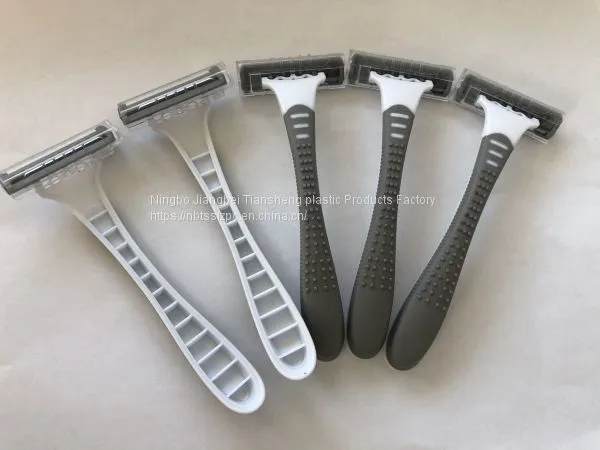
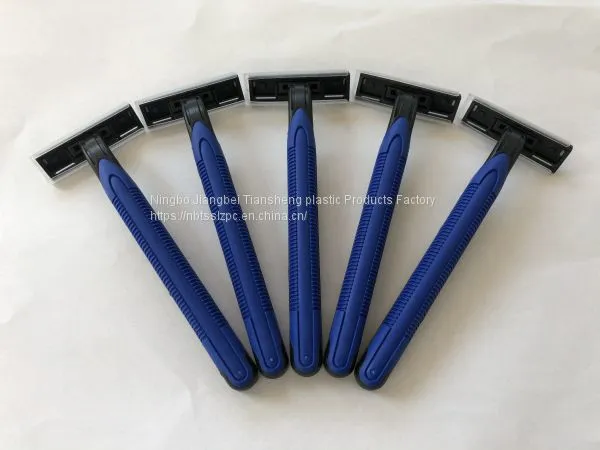
Polypropylene handles are the most common choice. PP is inexpensive, molds easily, and provides adequate rigidity for a limited-use product. Tiansheng Plastic Products uses PP as its standard handle material across most of its disposable razor range. The trade-off is a harder, less grippy surface compared to rubber-overmolded alternatives.
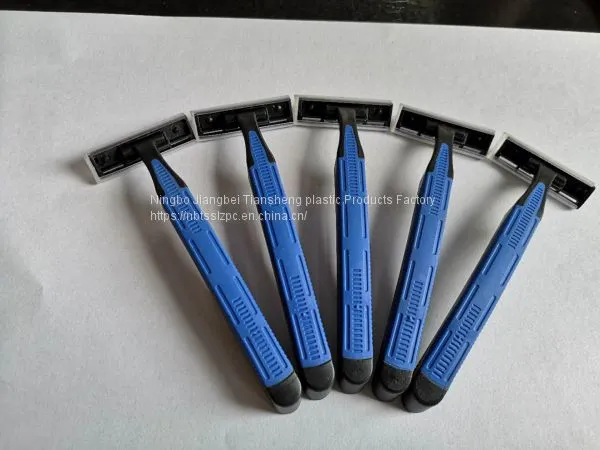
Rubber-overmolded handles add a thermoplastic elastomer layer over a rigid plastic core, providing a soft-touch grip that performs reliably in wet conditions. The overmolding process requires a two-shot mold or manual assembly, pushing the manufacturing cost roughly 12 to 18 percent higher than a plain PP handle. For buyers targeting mid-to-premium retail shelves, the rubber grip visibly differentiates the product at point of sale.
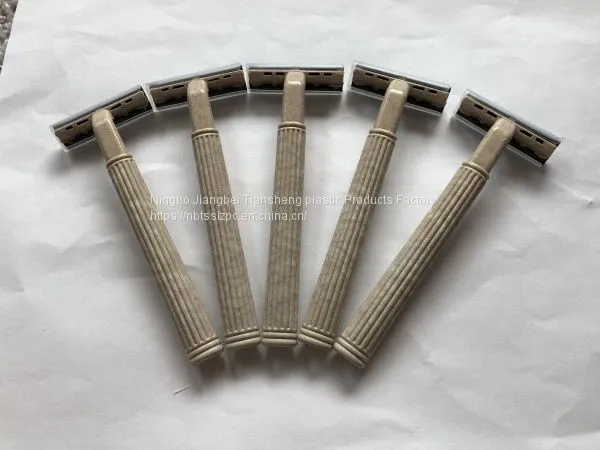
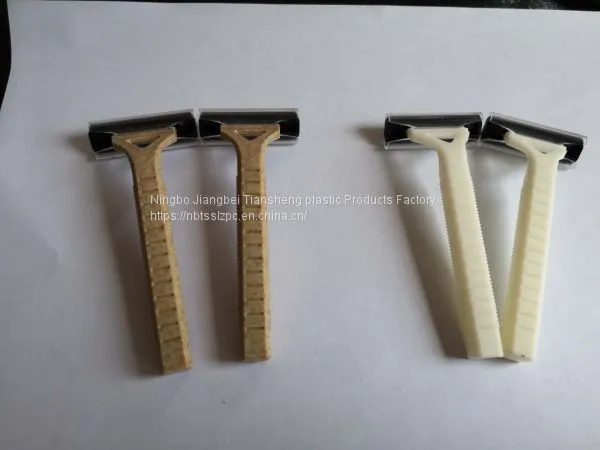
Wheat-straw composite handles represent a newer option driven by sustainability demand. These handles blend agricultural byproduct fibers with PP to reduce virgin plastic content by roughly 25 to 35 percent. Ningbo Jiangbei Tiansheng Plastic Products has developed wheat-straw razor models aimed at eco-conscious hotel chains and European retail buyers who prioritize reduced plastic consumption in their procurement criteria.
6. How Disposable Razors Differ from Cartridge Systems
B2B buyers who are new to the razor category sometimes conflate disposable razors with cartridge razors. The distinction matters because the two categories serve different supply chains, price tiers, and end-use scenarios.
A cartridge razor consists of a reusable handle and a replaceable blade cartridge. The user buys the handle once and purchases cartridges repeatedly. The cartridge itself contains the blades, lubricating strip, and pivot mechanism, similar to the head of a disposable razor. The difference is that the handle is a durable item, often made from metal or reinforced plastic with ergonomic shaping and substantial weight.
The key operational differences for B2B buyers center on SKU structure, consumer lock-in, and cost per shave. Cartridge razors involve a two-part SKU structure: handles and refills must be stocked separately, complicating inventory management. Cartridge systems also lock the consumer into a proprietary blade format, creating brand stickiness but raising switching barriers. And the retail price per shave is substantially lower for disposable razors than for cartridge refills, making disposables the format of choice for price-sensitive markets and one-time-use scenarios.
From a manufacturing standpoint, cartridge razors require tighter dimensional tolerances because the cartridge must snap securely onto the handle across thousands of attachment cycles. Disposable razors avoid this interface entirely, simplifying tooling and quality control. This is one reason factories like the Tiansheng facility in Ningbo focus on the disposable segment: the process is easier to scale while maintaining consistent output quality.
7. Why B2B Buyers Choose Disposable Razors
The commercial logic behind choosing disposable razors over other shaving formats differs depending on the buyer's business model. A hotel procurement manager, a pharmacy chain buyer, a relief-agency logistics coordinator, and a promotional products distributor all have distinct motivations.
For hospitality buyers, the disposable razor serves as a guest amenity that must meet a hygiene standard, cost very little per unit, and require no staff maintenance. Hotels typically order in quantities of roughly 10,000 to 100,000 units per shipment, with individual packaging that matches their brand aesthetic. The disposable format is ideal because guests use the razor once and discard it, and there is no risk of a previous guest having used the same handle.
For retail distributors, disposable razors offer a lower barrier to consumer trial compared to cartridge systems. A shopper who normally uses a branded cartridge razor might pick up a pack of disposables for travel or as a backup. If the disposable performs well, that trial can convert into repeat purchases, especially in price-sensitive markets across parts of Southeast Asia, Africa, and South America where cartridge-refill economics do not match local purchasing power.
For promotional and private-label buyers, disposable razors are lightweight, compact, and easy to customize with logo printing. A branded disposable razor handed out at a trade show generates brand exposure at roughly 8 to 15 US cents per unit for basic twin-blade models. Few other personal care products deliver that combination of utility and cost efficiency for promotional use.
8. Quality Indicators to Check When Sourcing
Not all disposable razors are built to the same standard, and the differences are not always visible from a product photo. B2B buyers should establish quality indicators that can be evaluated from physical samples before committing to a production order.
Blade sharpness is the most consequential variable. A dull blade causes tugging and irritation regardless of blade count. Reputable manufacturers test edge sharpness using standardized measurement equipment, with results falling within a defined range across batches. Buyers can request sharpness test reports or conduct a tactile comparison between supplier samples.
Blade alignment and spacing matter equally. In a multi-blade razor, each blade must sit at a precise angle relative to the skin plane. Misalignment of even a fraction of a millimeter creates uneven cutting pressure, experienced by the user as pulling or irritation. Visual inspection under magnification can reveal alignment issues, and a shave test with a representative user panel provides practical feedback.
Handle-to-head attachment strength determines whether the razor breaks during normal use. The joint should withstand bending forces well above typical grip pressure. A simple bench test applies gradually increasing pressure at the junction until failure.
The lubricating strip should remain firmly bonded to the head and not dissolve instantly upon contact with water. Quality strips activate gradually, releasing lubricating agents in proportion to the duration of use.
Our team at the factory runs each of these checks as part of standard outgoing inspection. For a recent shipment to a buyer in South America, QC flagged a batch where lubricating-strip adhesion was below threshold on roughly 3 percent of units. The batch was held, reworked, and re-inspected before release. That delay cost a few days but prevented a complaint that would have been far more expensive to resolve after delivery.
9. Packaging Formats and Their Market Implications
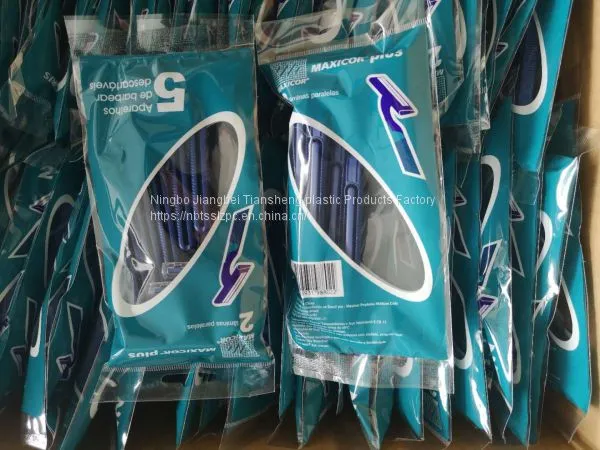
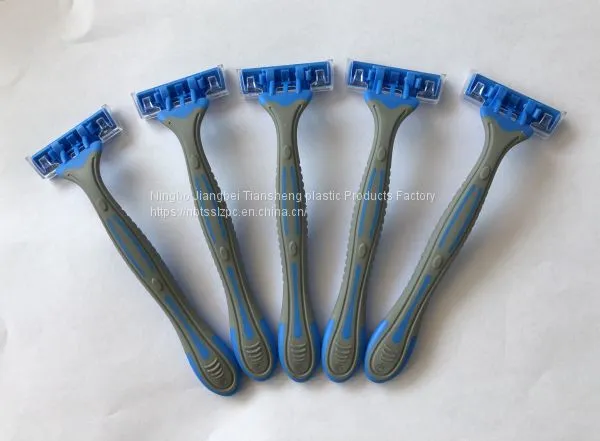
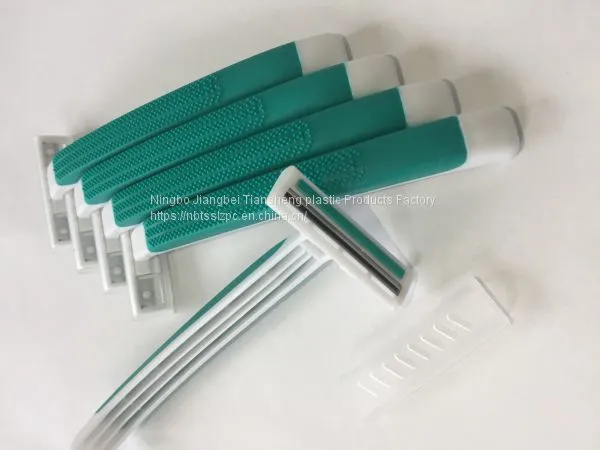
The way disposable razors are packaged affects cost, shipping density, and retail presentation. Bulk polybag packing maximizes carton density and is the standard for hotel supply. Blister card packaging roughly doubles the packaging cost per unit but is necessary for self-service retail. Custom box packaging suits premium lines and private-label programs, with MOQs typically starting at 30,000 to 50,000 units per SKU. Not long ago, a distributor working with Tiansheng Plastic Products used a mixed approach for a retail chain: polybag packs for the economy shelf and blister cards for the mid-tier shelf, using the identical razor in two formats to address different price segments without splitting production.
10. FAQ
10.1 What is the difference between a disposable razor and a safety razor?
A disposable razor is a single integrated unit that is discarded entirely after the blade dulls. A safety razor uses a reusable metal handle into which the user loads a separate double-edged blade. Safety razors involve a higher upfront cost but lower ongoing blade expenses, and they produce less plastic waste. Disposable razors offer convenience and a lower per-unit purchase price. B2B buyers in hospitality and promotional sectors almost always choose disposables, while specialty grooming retailers often carry both formats.
10.2 How many shaves does a typical disposable razor last?
A basic single-blade disposable razor is designed for roughly one to three shaves. A twin-blade model with a decent lubricating strip can deliver five to eight comfortable shaves. Triple-blade and four-blade versions with higher-grade steel blades may reach ten to twelve shaves before most users notice a decline in performance. Actual longevity depends on beard coarseness, shaving technique, and how the razor is stored between uses.
10.3 Are disposable razors recyclable?
Standard disposable razors are difficult to recycle because they combine multiple materials, including plastic, steel, and rubber, that cannot be separated easily in municipal recycling streams. Some manufacturers, including our team, are developing razors with wheat-straw composite handles that reduce plastic content, but full recyclability remains a challenge industry-wide. Buyers targeting markets with strict packaging waste regulations should discuss take-back or material-reduction options with their supplier.
10.4 What MOQ should a first-time buyer expect for disposable razors?
Most manufacturers in China set a minimum order quantity between roughly 5,000 and 10,000 pieces per SKU for standard models. Custom colors, packaging, or blade counts may push the MOQ to 20,000 pieces or higher due to production-line setup costs. Smaller trial orders of 1,000 to 3,000 pieces are sometimes available for existing product designs, though the unit price will be higher to cover handling costs. We typically recommend that first-time buyers start with a 5,000-piece trial order of a proven standard model before investing in custom specifications.
Recently Posted
-
Ningbo Jiangbei Tiansheng Plastic Products Factory: Three Decades of Disposable Razor Manufacturing
August 17, 2026In 1996, a plastic products factory opened its doors in the Hongtang area of Ningbo's Jiangbei District, in Zhejiang province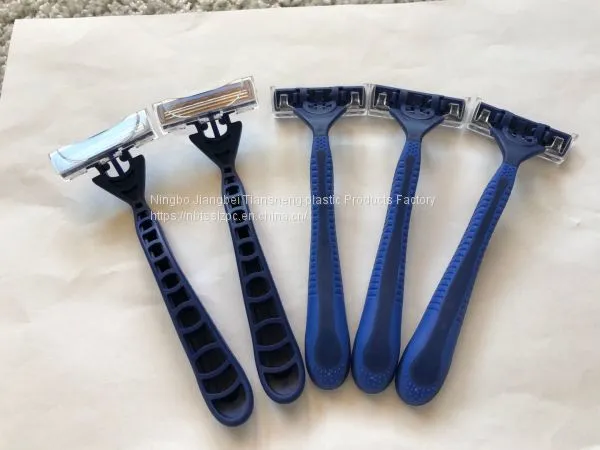 Read More
 -
Disposable Razors for Hotels: Procurement Guide for Hospitality Buyers
August 14, 2026A mid-range hotel chain in Southeast Asia received a series of guest complaints some time ago. The issue was not the room cleanlin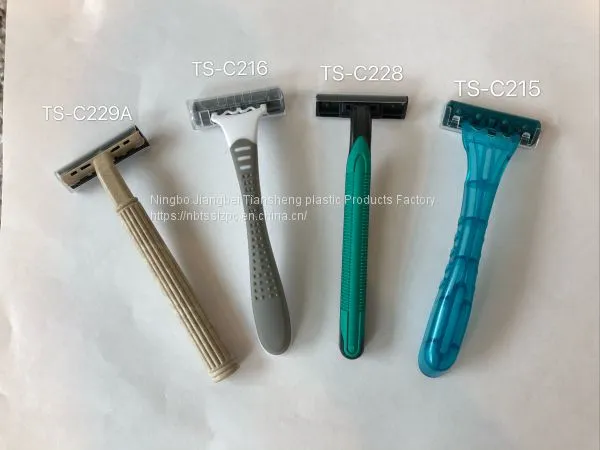 Read More
 -
How to Choose a Disposable Razor Manufacturer in China: A Step-by-Step Guide
August 13, 2026An importer based in South America spent roughly six months sourcing disposable razors from China some time ago. He contacted elev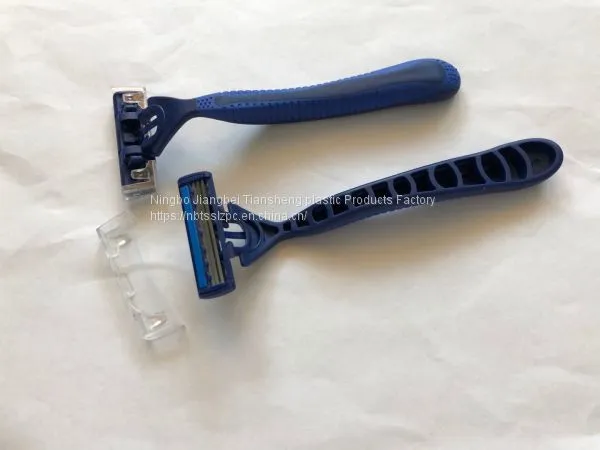 Read More
 -
Single vs Twin Blade Disposable Razors: Which One Fits Your Product Line
August 12, 2026A distributor in West Africa placed two orders with different suppliers some time ago. One order was for single-blade disposable r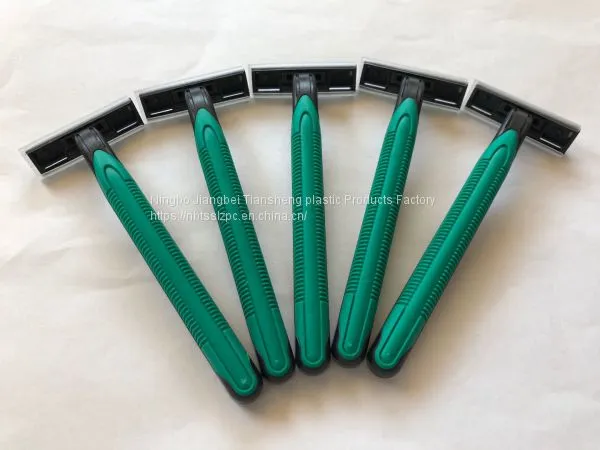 Read More

Contact Us
Recommended Products
-
 TS-C229-A Disposable Razor Male FemaleNegotiableMOQ: 10000 Pieces
 -
TS-C228 Disposable RazorNegotiableMOQ: 10000 Pieces
-
TS-C239 Disposable RazorNegotiableMOQ: 10000 Pieces
-
TS-C205 Disposable Razor With Two BladeNegotiableMOQ: 10000 Pieces
-
TS-C229A Disposable Razor ShaverNegotiableMOQ: 10000 Pieces
-
Disposable RazorNegotiableMOQ: 100 Pieces
-
TS-C216 Disposable Razor Personal CareNegotiableMOQ: 10000 Pieces
-
TS-C228 Disposable Razor ShaverNegotiableMOQ: 10000 Pieces
-
TS-212 Disposable Razor With Two BladeNegotiableMOQ: 10000 Pieces
-
TS-C229-A Eco-Friendly Disposable Shaving Razor Male FemaleNegotiableMOQ: 10000 Pieces
-
TS-C232 Disposable Hotel Shaving RazorNegotiableMOQ: 10000 Pieces
-
TS-C236 Eco-friendly Straw 2 Blade Shavers Wholesale Hotel Disposable RazorNegotiableMOQ: 10000 Pieces
-
TS-C209A Disposable Razor Shaver Four BladeNegotiableMOQ: 10000 Pieces
-
5-pc Disposable Razor ShaverNegotiableMOQ: 10000 Pieces
-
TS-C219 Eco Friendly Safety Wheat Straw Lady Men Hotel Travel Shaver Disposable RazorNegotiableMOQ: 10000 Pieces