
 Business License

How to Choose a Disposable Razor Manufacturer in China: A Step-by-Step Guide
An importer based in South America spent roughly six months sourcing disposable razors from China some time ago. He contacted eleven factories, received nine quotations, ordered samples from five, and eventually placed a production order with one. The first shipment arrived with consistent quality, and the importer was satisfied. The second shipment, however, had a different blade-coating formulation that made the razors feel noticeably rougher during shaving. When the importer raised the issue, the factory explained that the coating supplier had changed their formulation slightly and that the production team had not flagged the change because it fell within the factory's internal tolerance range. The importer had not included a blade-coating specification in the purchase contract because he had assumed that the coating on the production razors would match the coating on the samples. This assumption cost him a container of product that underperformed in his market and eroded trust with his retail buyers.
Sourcing disposable razors from China is not difficult in the sense of finding factories. There are many. The challenge lies in selecting a manufacturer whose production consistency, quality standards, communication practices, and business ethics align with your requirements over multiple orders and multiple years. This guide walks through the process step by step, from defining requirements to building a long-term supplier relationship.
1. Define Your Requirements Before Contacting Suppliers
The single most common mistake that first-time buyers make is approaching factories without a clear, written specification. A vague inquiry such as "please quote disposable razors" generates vague responses that are impossible to compare. A specific inquiry generates specific responses that reveal which factories can actually deliver what you need.
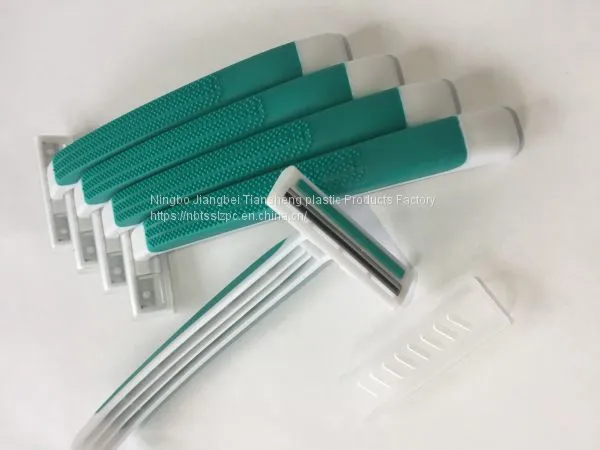
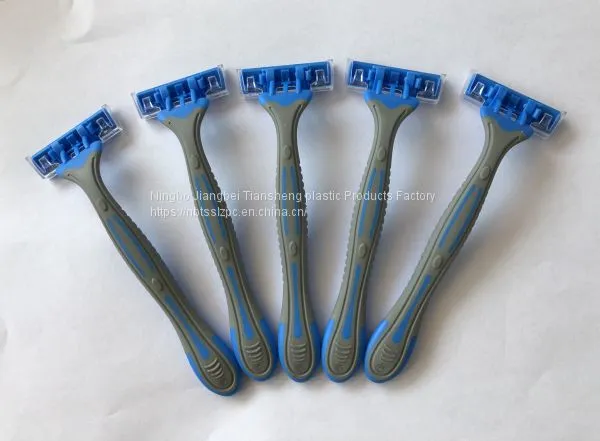
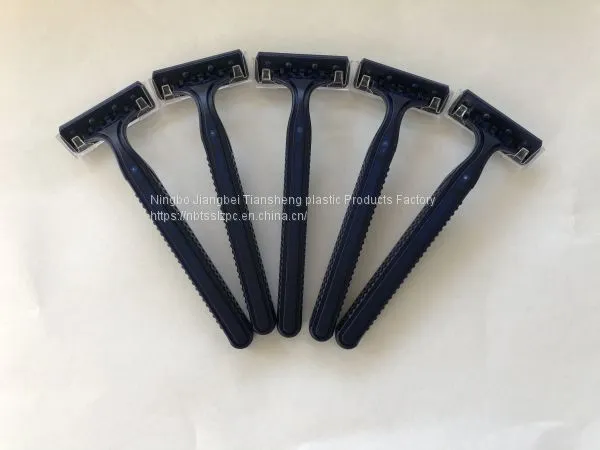
Before contacting any factory, write down at minimum these seven specifications. Blade count: single, twin, triple, or four. Handle material: PP, rubber-overmolded, or wheat-straw composite. Head type: fixed or pivoting. Lubricating strip: yes or no, and if yes, which formulation (aloe, vitamin E, silicone). Packaging format: bulk polybag, blister card, or custom box. Target unit price range, based on your market research and budget. Order volume: initial trial order quantity and expected annual volume.
Additional specifications that experienced buyers include: blade steel grade (420 or 440 series), blade coating type (PTFE, ceramic, or both), handle color, individual packaging requirements, and any certification needs specific to the destination market. The more precisely you define what you need, the more accurately factories can quote, and the less room there is for misunderstandings later.
2. Where to Find Disposable Razor Manufacturers
Chinese disposable razor manufacturers cluster in a few geographic areas where the supporting supply chain, skilled labor, and logistics infrastructure have developed over decades. Ningbo, in Zhejiang province, is one of the most significant manufacturing hubs for personal care products, including disposable razors. The city's proximity to Ningbo Port and Shanghai Port gives manufacturers located there a logistics advantage for export shipments.
B2B platforms such as GoldSupplier, Alibaba, and Made-in-China are the most common starting points for buyers who do not have existing supplier relationships in China. These platforms allow buyers to search by product category, filter by supplier verification status, and compare multiple quotations in a standardized format. The key is not to stop at the platform listing. A GoldSupplier storefront, for example, shows verified business license information, factory photos, product catalogs, and blog content. Reviewing this material thoroughly before sending an inquiry helps filter out trading companies posing as manufacturers and identifies factories whose product focus matches your requirements.
Trade shows such as the Canton Fair provide another sourcing channel, with the advantage that buyers can handle product samples and meet factory representatives in person. The disadvantage for smaller buyers is the travel cost and the fact that many exhibitors prioritize large-volume buyers during the show. For first-time buyers with order volumes under 100,000 pieces, online B2B platforms typically offer a more efficient sourcing path.
3. Evaluating Factory Credentials
Once you have identified a shortlist of potential suppliers, the next step is to verify that they are legitimate manufacturers with the capability to produce your order consistently. Several indicators help distinguish genuine factories from intermediaries.
A verified business license is the most basic credential check. On GoldSupplier, verified licenses appear with a badge on the supplier's storefront. The license should show "Manufacturer" as the business type and list the relevant product category in the business scope. A license showing "Trading Company" is a red flag if you want a direct factory relationship.
Factory photos and video provide visual evidence of production capability. Look for images that show the actual production floor, molding machines, assembly lines, and quality inspection stations. Stock photos of generic factory scenes are less informative than real photos that show specific equipment, worker stations, and packaging areas. Some buyers request a live video call walkthrough of the production floor, which is a reasonable request that most legitimate factories will accommodate.
Export experience is a valuable but not decisive credential. A factory that has been exporting for several years will typically have smoother communication, better understanding of international shipping documentation, and more experience handling the customs requirements of different destination markets. However, newer factories can sometimes offer more competitive pricing and greater flexibility on customization, so export history should be evaluated alongside other factors rather than treated as a hard filter.
Ningbo Jiangbei Tiansheng Plastic Products, for example, has been manufacturing razors since 1996 and exports to markets across five continents. A buyer evaluating this factory would find a verified manufacturer business license, a production facility of roughly 3,000 to 5,000 square meters, and a track record spanning roughly three decades. These are reasonable baseline credentials for a supplier capable of handling orders from 10,000 to 100,000-plus pieces.
4. The Sample Evaluation Process
Samples are the bridge between a supplier's claims and the actual product you will receive. A thorough sample evaluation process catches quality issues before they become production-order problems.
Request samples from at least two or three shortlisted suppliers rather than evaluating a single candidate. Comparing samples side by side makes differences in blade sharpness, handle finish, lubricating strip quality, and overall build quality immediately apparent. Differences that are invisible when handling a single sample become obvious when two or three samples are placed next to each other on a table.
Evaluate each sample against a structured checklist rather than relying on a general impression of "good" or "bad." The checklist should cover blade sharpness (test on a representative hair type, not just a visual inspection), blade alignment (check under magnification that all blades in a multi-blade razor are parallel and evenly spaced), handle feel (grip security with wet hands, general rigidity, absence of sharp edges or burrs), lubricating strip (check that it is firmly bonded and activates with water), and head-handle attachment (apply moderate bending force to confirm the joint is secure).
Spend at least 15 to 20 minutes handling each sample. Many quality issues become apparent only after repeated manipulation. A blade that feels sharp on the first touch may reveal burrs after running a finger lightly along the edge several times. A handle that feels rigid when held in the center may flex at the head junction when pressure is applied at an angle. Take notes on each sample immediately after the evaluation so that supplier-specific observations do not blur together in memory.
5. Factory Audit: What to Look For
If your order volume justifies it, a factory audit provides the deepest level of supplier evaluation. For smaller orders, a detailed video call tour and reference checks with existing customers can serve as practical substitutes.
During a factory visit or video tour, focus on production organization rather than equipment count. A clean, well-organized production floor with clearly marked material storage areas, defined workstations, and visible quality-check stations indicates a management culture that values consistency. A disorganized floor with mixed material piles, unclear workflow paths, and no visible quality documentation suggests the opposite, regardless of how many machines the factory owns.
Quality control processes should be visible and documented. Ask to see the incoming material inspection area, the in-process quality check stations on the assembly line, and the final inspection area. A factory that can show each station and explain the pass-fail criteria at each checkpoint has a quality system in place. A factory that cannot point to specific QC stations or describe what constitutes passing versus failing may be relying on informal, inconsistent practices.
Ask about defect tracking. A factory that tracks defect types, frequencies, and root causes over time is continuously improving. Ask to see a defect-tracking log, even if the specific numbers are not shared. The existence of such a log is more informative than the specific data it contains.
Our team maintains QC checkpoints at incoming material inspection, in-process blade-alignment verification, post-assembly handle-attachment testing, and final outgoing inspection. Each checkpoint has documented pass-fail criteria, and defect data is logged and reviewed monthly to identify trends that require corrective action.
6. Pricing and Negotiation
Price comparison across suppliers is meaningful only when the product specifications are identical. A quotation for a twin-blade razor with a PP handle at 6 US cents and another quotation for a twin-blade razor with a rubber-overmolded handle at 9 cents are not directly comparable because the handle material difference accounts for most of the price gap.
When comparing quotations, break each one down into its components: blade cost, handle cost, lubricating strip cost, packaging cost, assembly labor, and factory margin. Not every supplier will provide this level of detail voluntarily, but asking for a cost breakdown signals that you are a knowledgeable buyer and often leads to more transparent pricing discussions.
Payment terms are part of the overall cost equation, not a separate negotiation. A supplier offering a lower unit price but requiring 100 percent payment before production is effectively more expensive in risk-adjusted terms than a supplier offering a slightly higher unit price with 30 percent deposit and 70 percent against the bill of lading. Factor payment terms into your total cost comparison.
A typical payment structure for a first order is 30 percent deposit with the purchase order and 70 percent before shipment or against shipping documents. For repeat orders, terms may shift to 30/70 against documents or net-30 after shipment. Negotiate payment terms alongside unit pricing.
7. Contract and Quality Assurance Terms
The purchase contract is your primary tool for ensuring that production quality matches sample quality. Without a contract that specifies quality parameters, you are relying on the supplier's interpretation of what constitutes acceptable quality, and that interpretation may differ from yours.
Include a clear product specification in the contract. The specification should reference the approved sample and describe key quality parameters: blade steel grade, coating type, handle material, lubricating strip formulation. State that production units must match the approved sample in all material respects. A sentence such as "Production units shall conform to the quality, materials, and workmanship of the approved pre-production sample referenced as [sample ID]" establishes a clear benchmark.
Specify the acceptable quality level, or AQL, for the order. An AQL of 2.5 for major defects and 4.0 for minor defects is a common starting point for disposable razors. Major defects include blade sharpness failure, handle breakage, missing lubricating strip, and head-handle separation. Minor defects include cosmetic blemishes, slight color variation, and packaging scuffs that do not affect product function. The AQL defines the maximum percentage of defective units that the buyer will accept in a given inspection lot.
Include a third-party inspection clause if your order volume justifies it. Companies such as SGS, Bureau Veritas, and Intertek offer pre-shipment inspection services at factories across China for roughly 300 to 500 dollars per inspection day. A third-party inspection provides an independent quality verification before you authorize shipment, which is valuable for first orders and for orders from new suppliers.
8. Building a Long-Term Partnership
The goal of the sourcing process is not to find the cheapest supplier for a single order. It is to find a manufacturing partner who can grow with your business over multiple years and multiple product iterations.
Communication quality is the best predictor of long-term partnership success. A supplier who responds within 24 hours, answers questions directly, proactively raises potential issues before they become problems, and speaks your language well enough to avoid miscommunication is worth more than a supplier offering a slightly lower price but who is slow to respond or difficult to reach.
Start with a trial order of roughly 5,000 to 10,000 pieces before committing to a full production run. The trial order tests not just the product quality but the entire supplier interaction: communication during order confirmation, adherence to the promised production timeline, accuracy of shipping documentation, and responsiveness to post-delivery questions. A supplier who performs well on a small trial order is likely to perform well on larger orders.
Some time ago, a buyer in the Middle East placed a small trial order with Tiansheng Plastic Products for roughly 8,000 twin-blade razors. During production, our team noticed the lubricating-strip color in that batch was slightly lighter than the approved sample due to a raw-material batch variation. We sent a photo to the buyer, explained the variation, and offered to either proceed at a small discount or re-run the batch with corrected strip formulation at the original price. The buyer chose to proceed, appreciated the proactive communication, and has since placed orders totaling roughly half a million units. That supplier relationship grew from a small trial order because the communication built trust.
9. FAQ
9.1 How long does it take to receive samples from a Chinese razor manufacturer?
Standard product samples typically ship within 3 to 7 business days of the request, and international courier delivery adds roughly 3 to 7 days depending on the destination. Custom samples with specific colors, packaging, or handle modifications may take 2 to 4 weeks because the factory needs to set up a small production run or prepare custom molds. Buyers should budget roughly two weeks from sample request to sample receipt for standard products and roughly four to six weeks for custom samples.
9.2 What is the typical production lead time for a disposable razor order?
For standard products with no customization, lead time typically ranges from 15 to 30 days for orders of 50,000 to 200,000 pieces, depending on the factory's schedule and product complexity. Custom orders with branded packaging or modified handles may require 30 to 45 days. Shipping time is additional: roughly 20 to 35 days by sea to most international ports, or roughly 5 to 10 days by air for urgent shipments.
9.3 Should I visit the factory in person before placing an order?
A factory visit provides the most thorough evaluation, but it is not always practical for first-time buyers with smaller volumes. A live video call tour, combined with sample evaluation and reference checks, provides roughly 80 percent of the information a physical visit would yield at a fraction of the cost. For orders above 100,000 pieces or for relationships expected to develop into long-term partnerships, a physical visit is worth the investment. For initial trial orders of 5,000 to 20,000 pieces, a video tour and thorough sample evaluation are generally sufficient.
Recently Posted
-
Ningbo Jiangbei Tiansheng Plastic Products Factory: Three Decades of Disposable Razor Manufacturing
August 17, 2026In 1996, a plastic products factory opened its doors in the Hongtang area of Ningbo's Jiangbei District, in Zhejiang province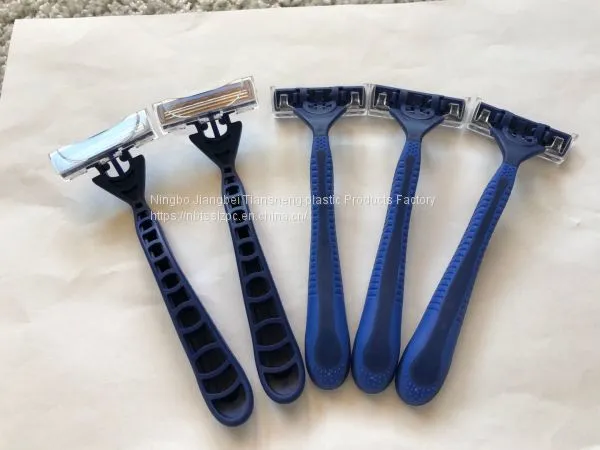 Read More
 -
Disposable Razors for Hotels: Procurement Guide for Hospitality Buyers
August 14, 2026A mid-range hotel chain in Southeast Asia received a series of guest complaints some time ago. The issue was not the room cleanlin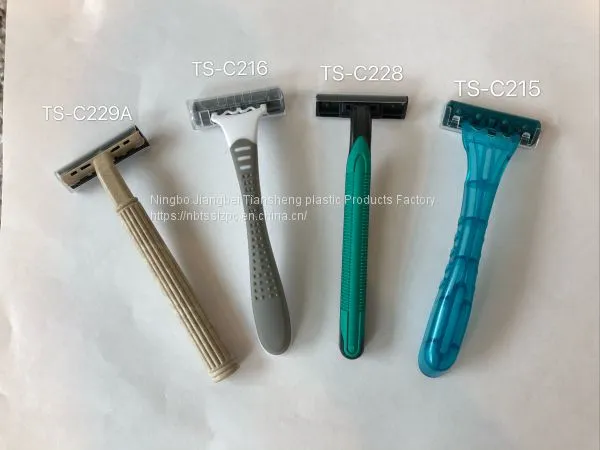 Read More
 -
Single vs Twin Blade Disposable Razors: Which One Fits Your Product Line
August 12, 2026A distributor in West Africa placed two orders with different suppliers some time ago. One order was for single-blade disposable r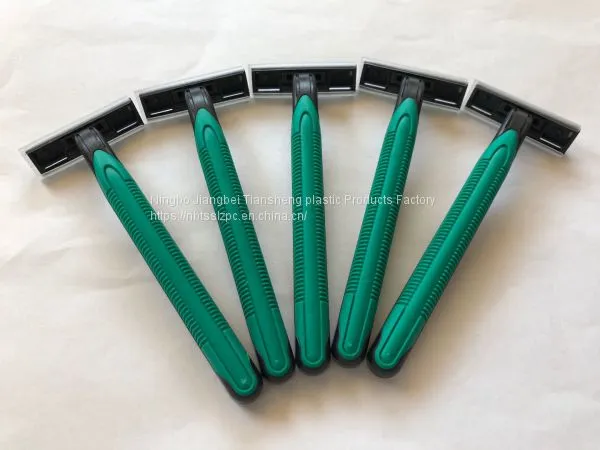 Read More
 -
What Is a Disposable Razor: A Complete Introduction for B2B Buyers
August 11, 2026A distributor in Eastern Europe placed an order for roughly 50,000 disposable razors some time ago. The shipment arrived on schedu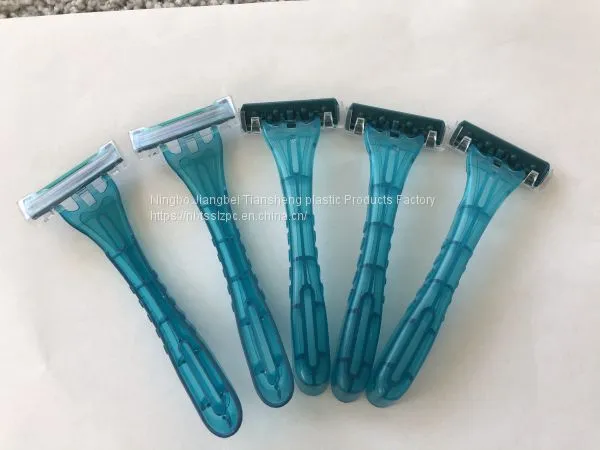 Read More

Contact Us
Recommended Products
-
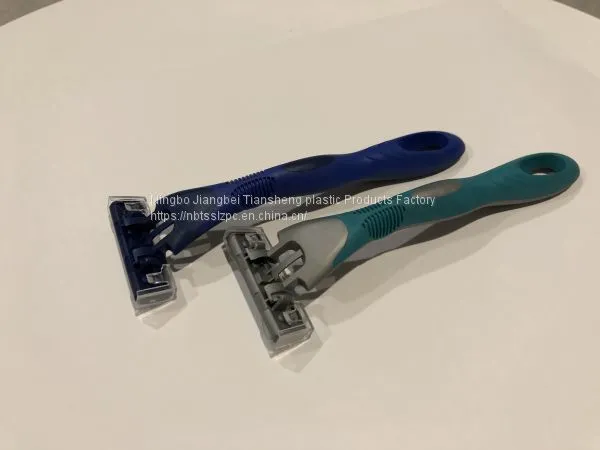
 TS-C229-A Disposable Razor Male FemaleNegotiableMOQ: 10000 Pieces
 -
TS-C228 Disposable RazorNegotiableMOQ: 10000 Pieces
-
TS-C239 Disposable RazorNegotiableMOQ: 10000 Pieces
-
TS-C205 Disposable Razor With Two BladeNegotiableMOQ: 10000 Pieces
-
TS-C229A Disposable Razor ShaverNegotiableMOQ: 10000 Pieces
-
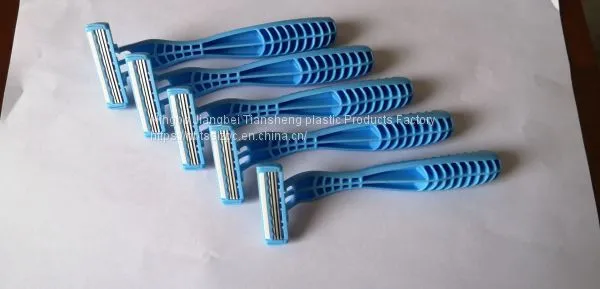
Disposable RazorNegotiableMOQ: 100 Pieces
-
TS-C216 Disposable Razor Personal CareNegotiableMOQ: 10000 Pieces
-
TS-C228 Disposable Razor ShaverNegotiableMOQ: 10000 Pieces
-
TS-212 Disposable Razor With Two BladeNegotiableMOQ: 10000 Pieces
-
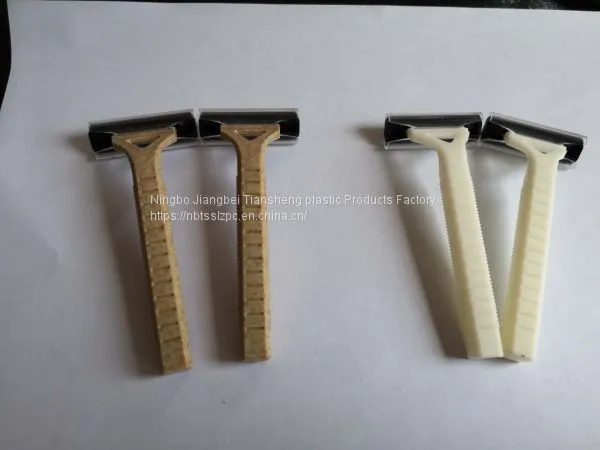
TS-C229-A Eco-Friendly Disposable Shaving Razor Male FemaleNegotiableMOQ: 10000 Pieces
-
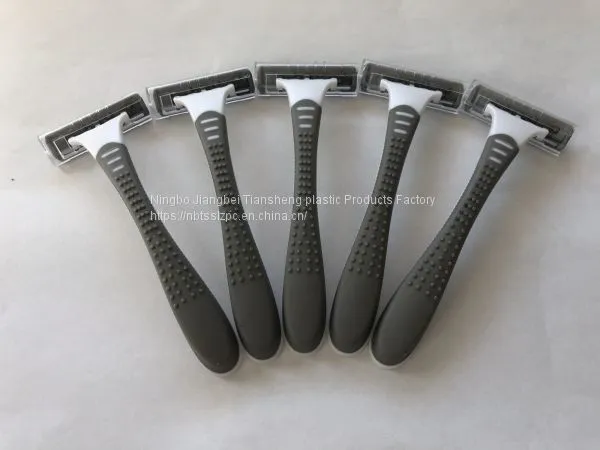
TS-C232 Disposable Hotel Shaving RazorNegotiableMOQ: 10000 Pieces
-
TS-C236 Eco-friendly Straw 2 Blade Shavers Wholesale Hotel Disposable RazorNegotiableMOQ: 10000 Pieces
-
TS-C209A Disposable Razor Shaver Four BladeNegotiableMOQ: 10000 Pieces
-
5-pc Disposable Razor ShaverNegotiableMOQ: 10000 Pieces
-
TS-C219 Eco Friendly Safety Wheat Straw Lady Men Hotel Travel Shaver Disposable RazorNegotiableMOQ: 10000 Pieces