
 Business License

Disposable Razors for Hotels: Procurement Guide for Hospitality Buyers
A mid-range hotel chain in Southeast Asia received a series of guest complaints some time ago. The issue was not the room cleanliness, the breakfast spread, or the staff service. It was the complimentary disposable razor in the bathroom amenity kit. Guests reported that the razor felt flimsy in the hand. A few said it tugged rather than cut. One guest cut himself and left a negative review that mentioned the razor by description. The hotel had sourced the razors based on one criterion: the lowest unit price available from a general amenity supplier. The procurement team had treated the razor as a checkbox item rather than as a product with real performance characteristics that guests would notice. After the complaints, the hotel switched to a twin-blade model with a rubberized handle from a dedicated razor manufacturer. The complaints stopped. The lesson cost the chain a few negative reviews and one batch of unusable inventory, but it taught a principle that every hospitality buyer should internalize: guests judge hotel quality partly by the small things, and the razor in the bathroom is one of them.
This guide covers everything a hotel procurement team needs to know about disposable razors: the types available, what features matter for guest satisfaction, packaging requirements, cost structure, customization options, and the sustainability considerations that are increasingly shaping purchasing decisions in the hospitality sector.
1. Why Hotels Stock Disposable Razors
Hotels provide disposable razors as a guest convenience and a brand touchpoint. A guest who forgets to pack a razor arrives at the hotel with a problem. The front desk solves that problem in seconds by handing over a complimentary razor. This interaction is small, but it generates goodwill that contributes to overall guest satisfaction scores.
Beyond the immediate convenience function, the razor serves as a subtle brand signal. A razor that feels solid, shaves smoothly, and comes in clean, professional packaging tells the guest that the hotel pays attention to detail. A razor that feels like it cost a fraction of a cent and barely functions sends the opposite message. In an industry where online reviews and star ratings drive booking decisions, the cumulative effect of these small signals across thousands of guest interactions per year is not trivial.
From an operational standpoint, disposable razors are low-maintenance amenities. They require no staff training, no equipment maintenance, and no storage conditions beyond a dry shelf. Housekeeping simply restocks the amenity kits, and the front desk replenishes the supply of extras for guests who request them.
2. Types of Hotel Disposable Razors
Not all disposable razors are suitable for hotel use. The requirements of a hotel razor differ from those of a retail razor in several important ways, and understanding these differences helps procurement teams select the right product.
| Type | Typical Hotel Use | Guest Perception |
|---|---|---|
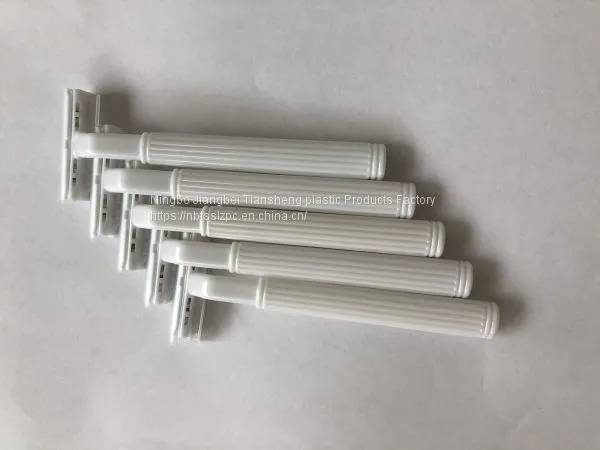
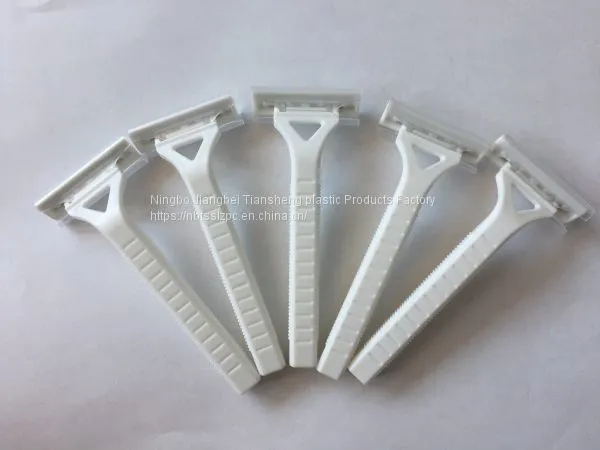
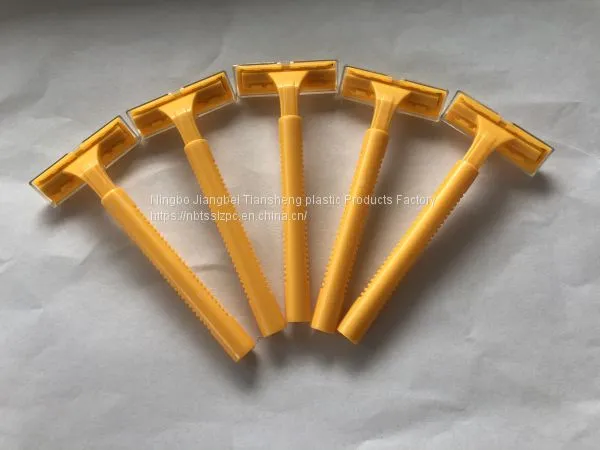
| Single-blade, basic plastic handle | Budget hotels, motels, hostels | Functional but basic; risk of negative perception |
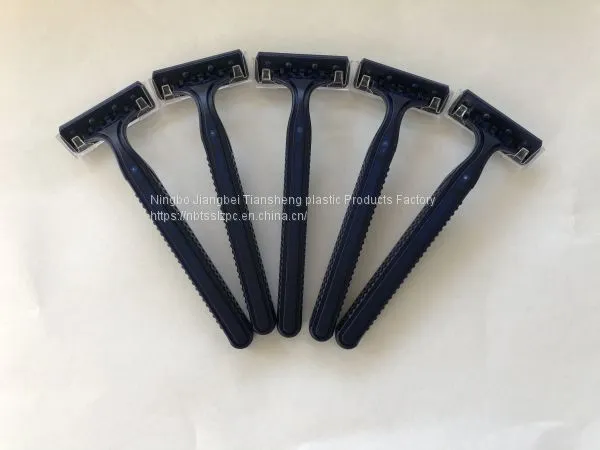
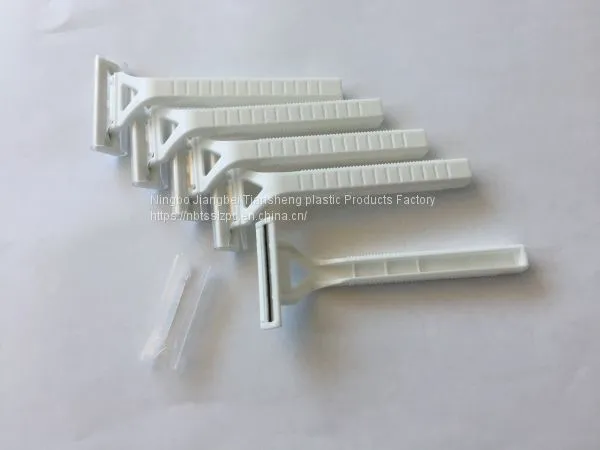
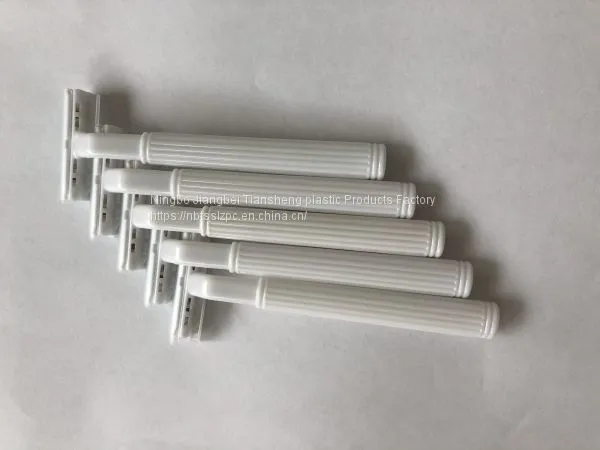
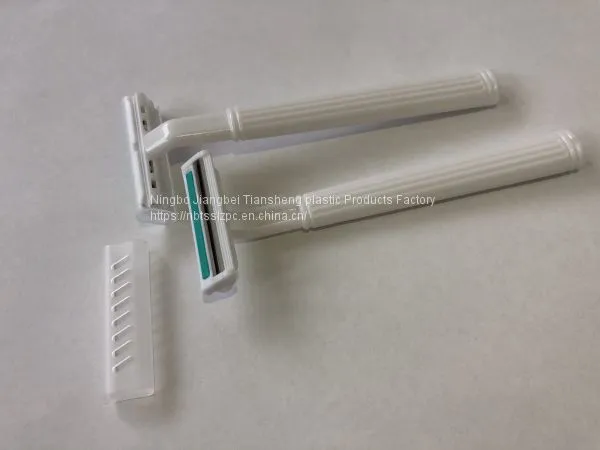
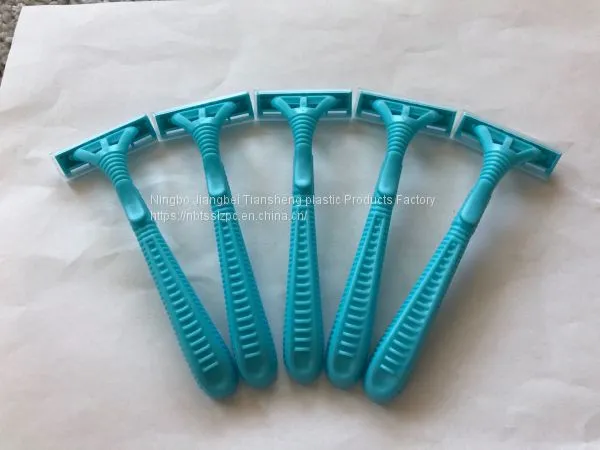
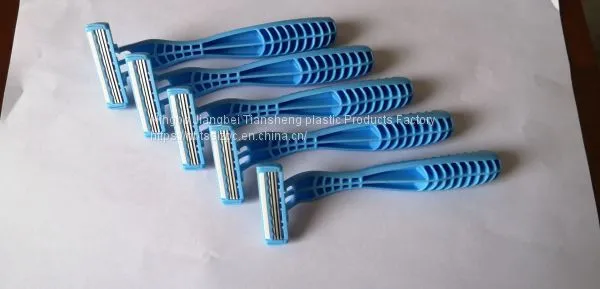
| Twin-blade, PP handle | Mid-range hotels (3-star) | Adequate; meets baseline guest expectations |
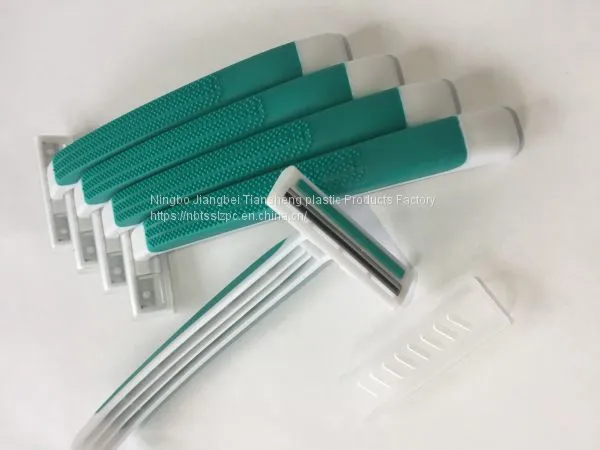
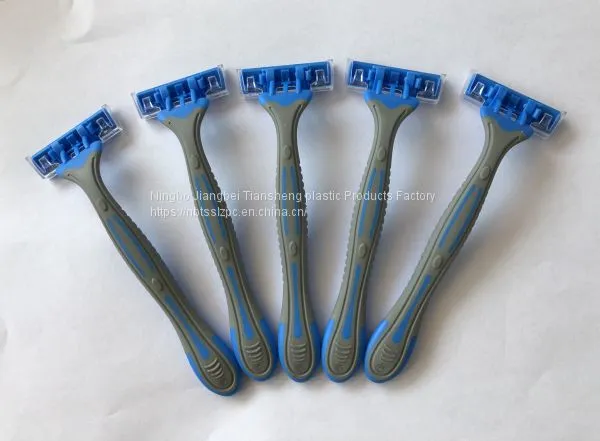
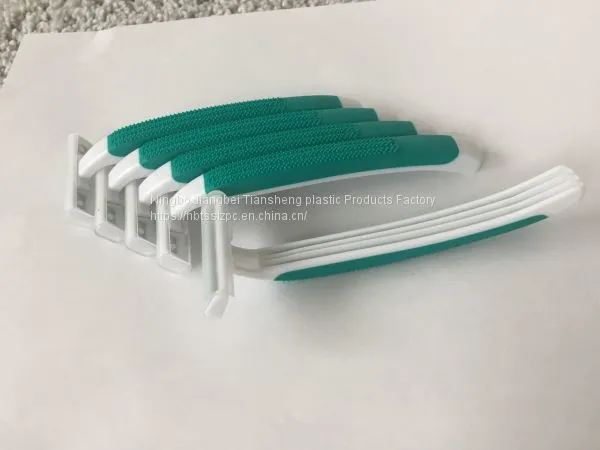
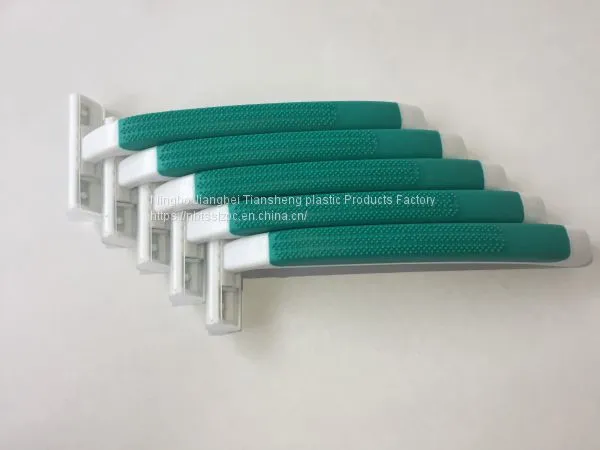
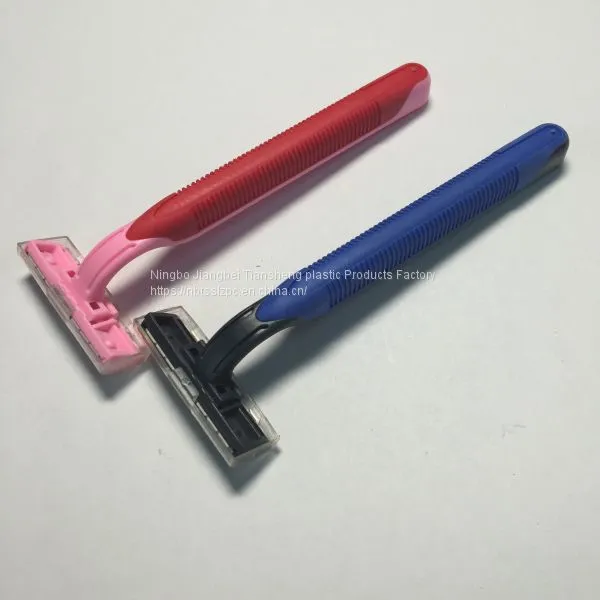
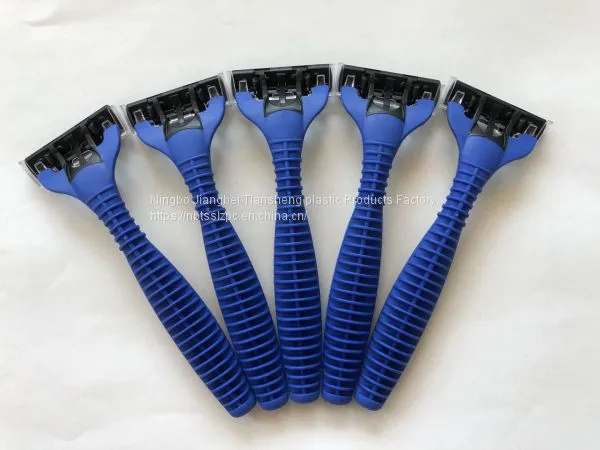
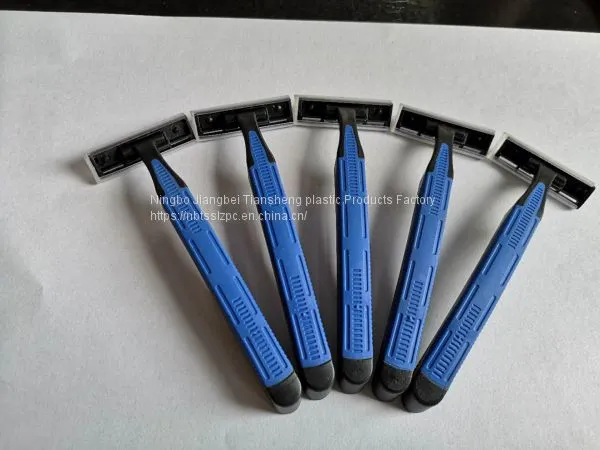
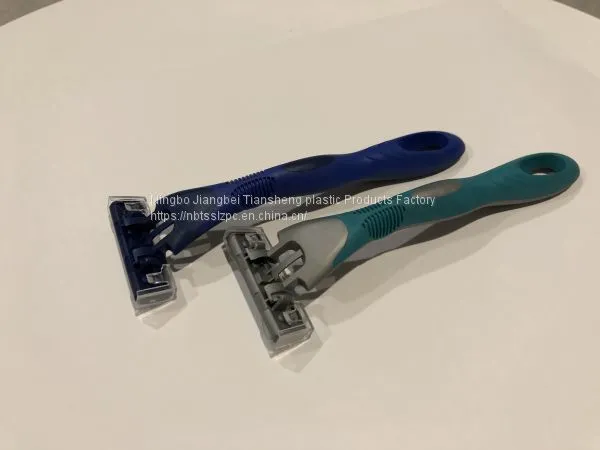
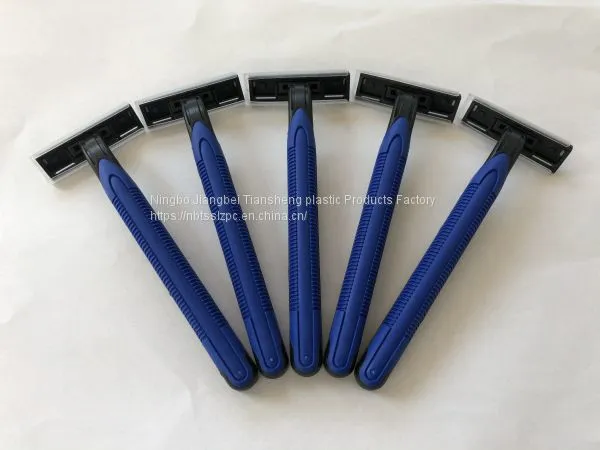
| Twin-blade, rubber grip handle | Business hotels, boutique hotels | Noticeably better quality; positive touchpoint |
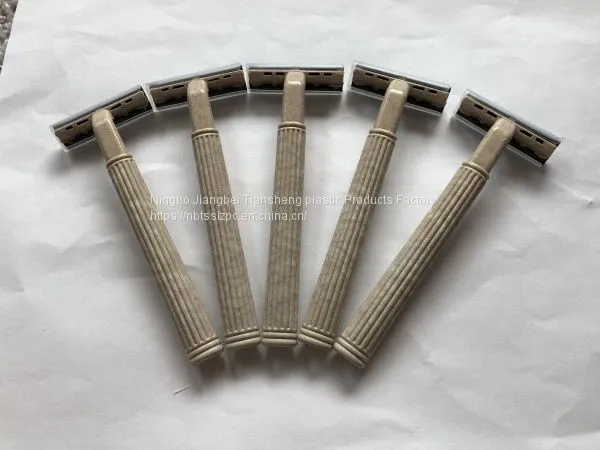
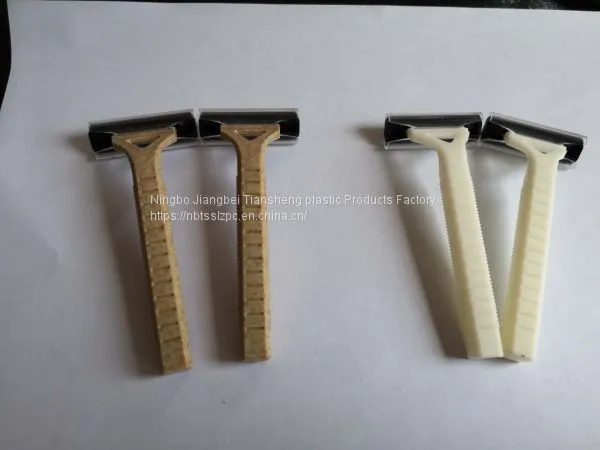
| Twin-blade, wheat-straw eco handle | Eco-certified hotels, green brands | Aligns with sustainability branding; premium perception |
| Triple-blade, pivoting head | Luxury hotels, 5-star properties | Premium; comparable to personal-use razor quality |
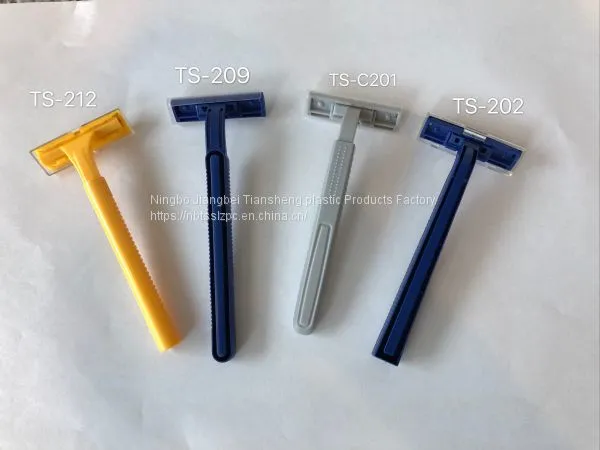
The sweet spot for most hotels falls in the twin-blade range. A twin-blade razor with a decent handle offers enough performance to satisfy a guest who needs a quick shave before a meeting, without crossing into the premium cost territory that makes sense only for properties where guests expect luxury-tier amenities. Budget hotels can step down to a basic single-blade or simple twin-blade model, but the cost savings are small enough, typically 1 to 3 cents per unit, that many mid-range properties choose to standardize on twin-blade razors across all properties to maintain consistent brand experience.
3. Key Features Hotels Should Look For
When evaluating disposable razors for hotel use, procurement teams should assess five features that directly affect guest experience.
Blade sharpness and coating quality top the list. A hotel razor gets used once, often on short notice, by a guest who may be in a hurry. The blade must cut cleanly on the first stroke without tugging. A PTFE or ceramic coating on the blade edge reduces friction and makes the single-use experience feel smoother. Our factory applies a PTFE coating as standard on hotel-grade razor blades because the marginal cost of the coating is negligible compared to the guest-experience benefit it delivers.
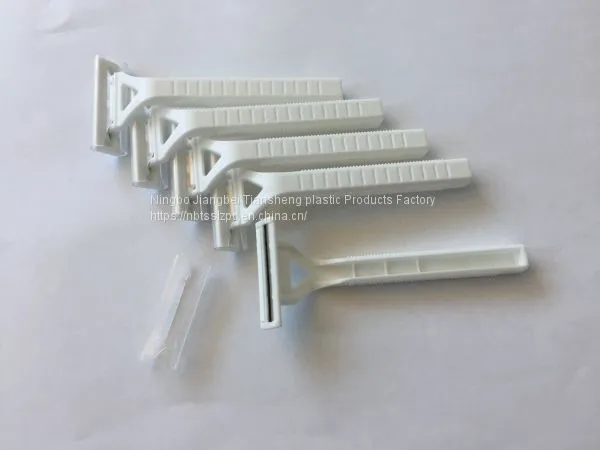
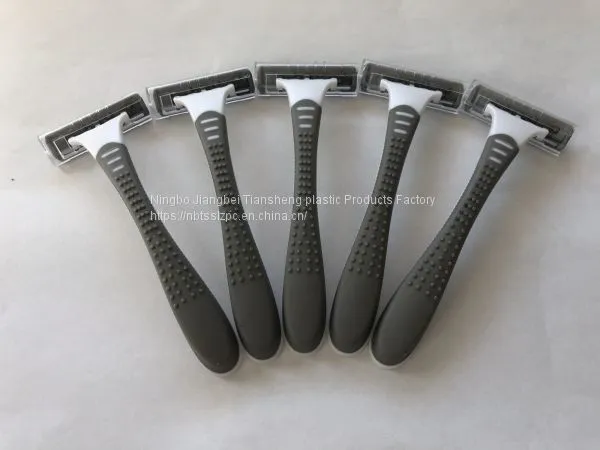
Handle grip security matters more for hotel razors than for retail razors. A hotel guest uses the razor in an unfamiliar bathroom, possibly with wet hands, and often without having unpacked their own shaving products. A handle that slips in wet conditions creates a safety hazard. Rubber-overmolded grips or deeply textured plastic handles both provide adequate wet-grip performance. Smooth, glossy plastic handles should be avoided for hotel applications.
Lubricating strip presence is a differentiator that separates a basic hotel razor from a quality one. A strip infused with aloe or vitamin E reduces the friction between blade and skin, making a single-pass shave feel smoother. For a one-use hotel razor, the strip does not need to last through multiple shaves. It just needs to activate quickly upon contact with water and provide lubrication for the roughly two to three minutes that a typical shave takes.
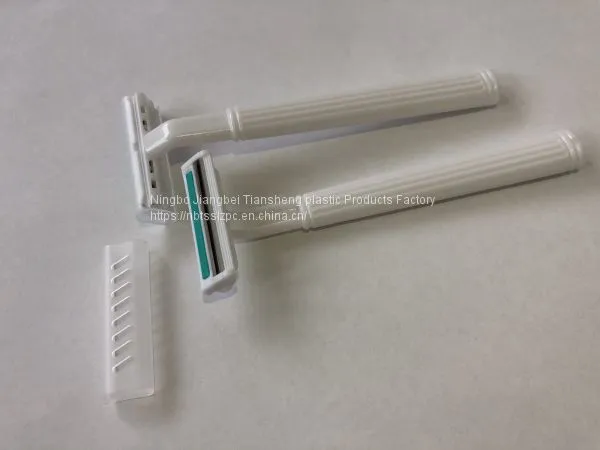
Individual hygienic packaging is non-negotiable for hotel use. Each razor must be sealed in its own wrapper, both for hygiene assurance and for the guest's peace of mind. The packaging should be easy to open without scissors and should clearly indicate that the product is new and unused.
Finally, the razor should not look or feel sharp in any area other than the blade edge. Rough mold parting lines, sharp corners on the handle, or burrs on the head housing create a negative tactile impression and, in the worst case, a minor injury. A reputable manufacturer deburrs and finishes every unit as part of the standard production process.
4. Individual Packaging Requirements
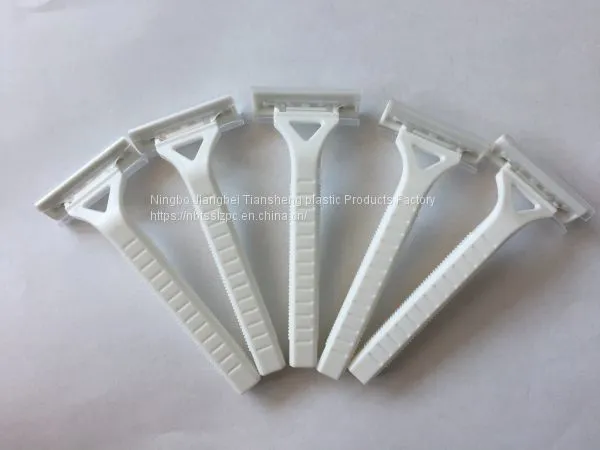
Hotel razor packaging serves three functions: hygiene assurance, brand communication, and ease of use. Getting the packaging right is as important as getting the razor right.
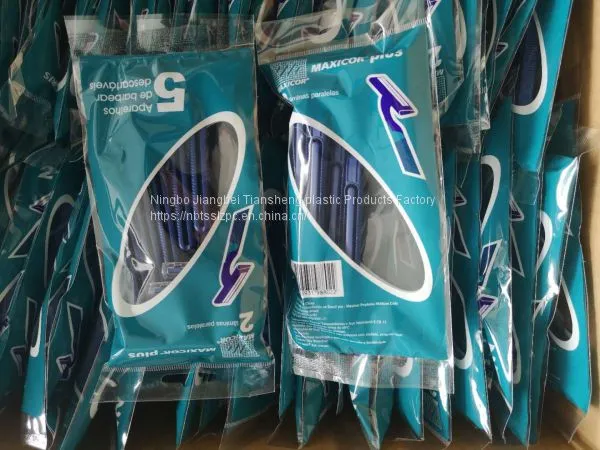
The hygiene seal must be tamper-evident. The guest should be able to see immediately that the razor inside the package has not been previously opened or used. A simple polybag with a peel-and-seal strip meets this requirement at minimal cost. Some hotels add a paper band or a sticker seal as a secondary tamper indicator, but for most applications, a properly sealed polybag is sufficient.
Brand communication through packaging varies by hotel category. Budget and mid-range hotels typically use generic packaging with the hotel name printed on the wrapper or on a simple insert card. The cost adder for custom-printed polybag packaging is roughly 0.5 to 1 US cent per unit at volumes above 50,000 pieces. Luxury properties sometimes invest in custom-printed paper boxes or sleeves that turn the razor into a small branded gift. The cost adder for custom paper packaging can run roughly 3 to 8 US cents per unit, which makes sense only for properties where the amenity presentation is part of the premium room-rate proposition.
The package must be easy to open. A guest standing in a hotel bathroom with wet hands should be able to open the razor package without struggling. Peel-open seals with a clearly marked tab, or tear-notch polybags, both work well. Packaging that requires scissors or sharp fingernails to open generates frustration at exactly the moment when the guest is about to use the product.
5. Quality Standards and Guest Safety
Hotel razors carry safety implications that go beyond normal consumer-use scenarios. A guest who cuts themselves with a hotel-provided razor may associate the injury with the hotel rather than with the product, creating liability exposure and reputational risk.
Blade-edge quality is the primary safety variable. A blade with microscopic burrs or inconsistent edge geometry can catch on skin rather than cutting hair cleanly. Manufacturers should test blade-edge consistency as part of routine quality control. Ningbo Jiangbei Tiansheng Plastic Products runs edge-quality checks on every production batch of hotel-grade razors, with pass-fail criteria based on standardized sharpness and coating-uniformity measurements.
Handle-to-head attachment strength is a structural safety concern. If the head separates from the handle during use, the exposed blade assembly becomes a sharp object that the guest must handle directly. The attachment should be tested to withstand forces several times greater than what normal shaving exerts. A pull-test fixture at the factory verifies this on a sampling basis.
Material safety is the third dimension. All plastic components that contact the guest's skin should be free of BPA and phthalates. The steel used in the blades should be food-grade or medical-grade stainless, typically 420 or 440 series, to avoid any risk of allergic reaction or skin irritation from metal ions leaching during the shave. Buyers should request material safety data sheets from their supplier and confirm that the razor complies with the consumer product safety regulations in their destination market.
6. Cost Considerations and MOQ for Hotel Orders
Hotel razor procurement operates within tight cost constraints. A hotel with 200 rooms and an average occupancy rate of 75 percent might go through roughly 55,000 razor units per year, assuming one razor per occupied room. At 8 US cents per unit, the annual razor budget comes to roughly 4,400 dollars, a modest line item in the overall amenity budget. At 15 cents per unit for a premium model, the annual cost rises to roughly 8,250 dollars. The difference of roughly 3,850 dollars per year, or about 10 dollars per day, is small enough that many hotel managers choose the better razor once they understand the numbers.
Minimum order quantities for hotel-grade razors typically range from 5,000 to 10,000 pieces per SKU for standard models. A single mid-sized hotel ordering 50,000 razors per year can meet the MOQ comfortably. Smaller hotels or boutique properties with lower consumption may need to combine orders or work with a distributor rather than buying directly from the manufacturer.
7. Customization and Branding Options
Customization turns a generic hotel razor into a branded touchpoint. The options range from simple to elaborate, and the cost scales accordingly.
| Customization Level | Description |
|---|---|
| Logo on handle | Pad-printed or hot-stamped hotel logo on the razor handle |
| Custom-printed polybag | Hotel name, logo, and design on the individual wrapper |
| Custom color handle | Razor handle molded in a specific brand color instead of standard white/black |
| Custom paper box | Branded paperboard box with hotel design, possibly with a die-cut window |
| Full private-label kit | Custom razor + custom packaging + insert card, all branded to hotel spec |
8. Sustainability Trends in Hotel Amenities
Sustainability requirements are reshaping hotel amenity procurement worldwide. Many major hotel groups have announced plastic-reduction targets, and single-use plastic amenities are a primary focus area. Disposable razors, with their plastic handles and mixed-material construction, sit squarely in the crosshairs of these initiatives.
Several approaches are emerging. Wheat-straw composite handles, which replace roughly 25 to 35 percent of virgin PP with agricultural byproduct fibers, reduce the plastic footprint without sacrificing functional performance. The natural fiber gives the handle a matte, textured appearance that some hotel brands find aesthetically aligned with their eco-positioning.
Paper-wrapped razors eliminate the plastic polybag from packaging. The trade-off is that paper provides less moisture protection than plastic, which can affect lubricating strip longevity during extended warehouse storage. Hotels in humid climates may need to weigh the sustainability benefit against the risk of product degradation before the razor reaches the guest.
Our facility has invested in wheat-straw molding capability specifically to serve hotel buyers facing pressure from corporate sustainability mandates. The production process is similar to standard PP molding, with the added step of pre-blending the fiber with the polymer before injection. The resulting handle performs comparably to a standard PP handle, though the surface finish has a slightly more textured feel that some users prefer for grip security.
9. FAQ
9.1 How many disposable razors should a hotel order for initial stock?
A reasonable calculation multiplies the number of rooms by the occupancy rate by the days of buffer inventory. For a 200-room hotel at 75 percent occupancy with a 30-day buffer, the initial order would be roughly 4,500 razors. Most hotels order larger quantities to reduce per-unit shipping costs, so a first order of 10,000 to 20,000 pieces is common. The razors have an effectively unlimited shelf life if stored in dry conditions, so over-ordering does not create waste risk.
9.2 What is the difference between a hotel disposable razor and a regular retail disposable razor?
Hotel razors are typically configured for single use, with simpler packaging and fewer cosmetic features compared to retail versions. A hotel razor may lack the elaborate blister card, multi-color printing, and brand storytelling that a retail razor requires to compete on a store shelf. The functional differences are smaller: a quality hotel razor uses the same blade steel, the same PTFE coating, and the same lubricating strip formulation as a comparable retail razor. The cost savings come from streamlined packaging and the absence of retail-grade marketing materials.
9.3 Can hotel razors be customized with a logo on the handle?
Yes, pad printing and hot stamping are the two most common methods for applying a logo to a disposable razor handle. Pad printing works well for simple one or two-color logos on flat or slightly curved handle surfaces. Hot stamping produces a more premium metallic or foil finish. Both methods add roughly 0.5 to 1.5 US cents per unit, depending on the logo complexity and the number of colors. The MOQ for customized logo printing typically starts at 10,000 to 20,000 pieces.
Recently Posted
-
Ningbo Jiangbei Tiansheng Plastic Products Factory: Three Decades of Disposable Razor Manufacturing
August 17, 2026In 1996, a plastic products factory opened its doors in the Hongtang area of Ningbo's Jiangbei District, in Zhejiang province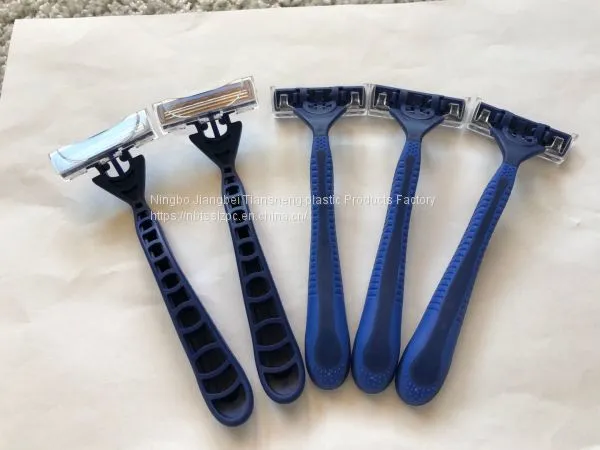 Read More
 -
How to Choose a Disposable Razor Manufacturer in China: A Step-by-Step Guide
August 13, 2026An importer based in South America spent roughly six months sourcing disposable razors from China some time ago. He contacted elev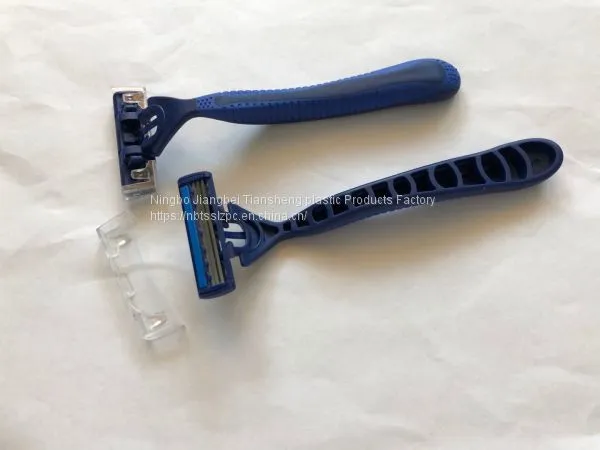 Read More
 -
Single vs Twin Blade Disposable Razors: Which One Fits Your Product Line
August 12, 2026A distributor in West Africa placed two orders with different suppliers some time ago. One order was for single-blade disposable r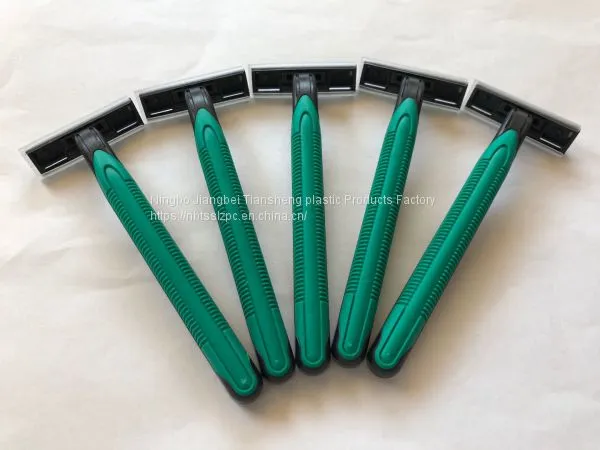 Read More
 -
What Is a Disposable Razor: A Complete Introduction for B2B Buyers
August 11, 2026A distributor in Eastern Europe placed an order for roughly 50,000 disposable razors some time ago. The shipment arrived on schedu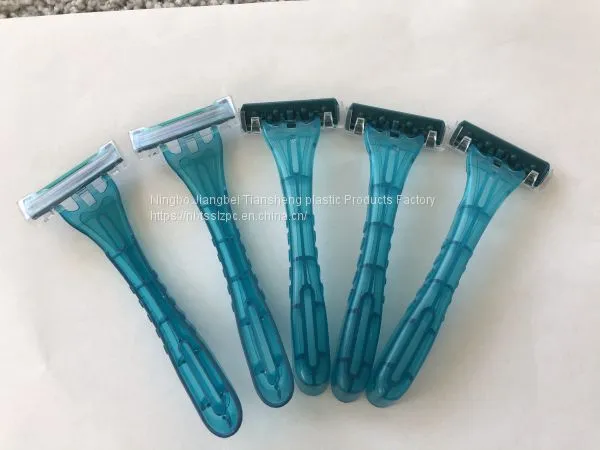 Read More

Contact Us
Recommended Products
-
 TS-C229-A Disposable Razor Male FemaleNegotiableMOQ: 10000 Pieces
 -
TS-C228 Disposable RazorNegotiableMOQ: 10000 Pieces
-
TS-C239 Disposable RazorNegotiableMOQ: 10000 Pieces
-
TS-C205 Disposable Razor With Two BladeNegotiableMOQ: 10000 Pieces
-
TS-C229A Disposable Razor ShaverNegotiableMOQ: 10000 Pieces
-
Disposable RazorNegotiableMOQ: 100 Pieces
-
TS-C216 Disposable Razor Personal CareNegotiableMOQ: 10000 Pieces
-
TS-C228 Disposable Razor ShaverNegotiableMOQ: 10000 Pieces
-
TS-212 Disposable Razor With Two BladeNegotiableMOQ: 10000 Pieces
-
TS-C229-A Eco-Friendly Disposable Shaving Razor Male FemaleNegotiableMOQ: 10000 Pieces
-
TS-C232 Disposable Hotel Shaving RazorNegotiableMOQ: 10000 Pieces
-
TS-C236 Eco-friendly Straw 2 Blade Shavers Wholesale Hotel Disposable RazorNegotiableMOQ: 10000 Pieces
-
TS-C209A Disposable Razor Shaver Four BladeNegotiableMOQ: 10000 Pieces
-
5-pc Disposable Razor ShaverNegotiableMOQ: 10000 Pieces
-
TS-C219 Eco Friendly Safety Wheat Straw Lady Men Hotel Travel Shaver Disposable RazorNegotiableMOQ: 10000 Pieces