
 Business License

Ningbo Jiangbei Tiansheng Plastic Products Factory: Three Decades of Disposable Razor Manufacturing
In 1996, a plastic products factory opened its doors in the Hongtang area of Ningbo's Jiangbei District, in Zhejiang province on China's eastern coast. The factory produced a modest range of injection-molded consumer goods and employed a small team. Over the three decades that followed, that facility evolved into a specialized manufacturer of disposable razors, exporting to markets across five continents from the same geographic base where it started. This is the story of Tiansheng Plastic Products: not a grand corporate saga, but a steady, focused journey of a manufacturer that chose to do one thing and kept doing it better.
1. A Manufacturing Story Rooted in Ningbo
Ningbo Jiangbei Tiansheng Plastic Products Factory was established in 1996 in what was then a developing industrial zone on the outskirts of Ningbo. The location was not chosen for prestige. It was chosen for practicality. The area offered reasonable land costs, access to a growing pool of factory workers, and proximity to Ningbo Port, one of China's largest cargo ports by throughput. These same practical considerations continue to benefit the factory's operations today.
Ningbo itself has developed into one of China's most significant manufacturing and export hubs over the past few decades. The city and its surrounding industrial zones host thousands of factories across sectors from automotive components to home appliances to personal care products. This density creates a supplier ecosystem that Tiansheng draws on daily: local mold-making shops, plastic resin distributors, packaging printers, and logistics providers are all within a short drive. The concentration of manufacturing know-how in the Ningbo region means that a factory like ours can source specialized services quickly and at competitive rates, which translates into shorter lead times and more consistent output for our buyers.
The factory occupies a facility of roughly 3,000 to 5,000 square meters in the Hongtang area. The space houses injection molding machines, blade-insertion assembly lines, quality inspection stations, packaging areas, raw material storage, and finished goods warehousing. While the square footage does not rival the enormous industrial campuses of some Chinese manufacturers, it is appropriately scaled for a specialized operation that focuses on one product category and maintains tight control over every stage of the production process.
2. Focused on One Product: The Disposable Razor
Many small and mid-sized Chinese factories diversify their product lines over time, adding new categories as customer demand shifts. Tiansheng Plastic Products chose a different path. From the early years, the factory identified disposable razors as its core product and invested its equipment, training, and process development budget into that single category.
This focus yields several practical benefits for buyers. Tooling investment is concentrated rather than spread across multiple product lines, so molds are maintained to tight tolerances and replaced before wear affects product quality. Operator training is deep rather than broad: an assembly-line worker who has handled razor components for years develops a tactile sense for alignment issues, material defects, and assembly errors that cannot be captured in a written checklist. Raw material purchasing is concentrated, which gives the factory stronger negotiating leverage with steel and plastic suppliers and more consistent material quality across production batches.
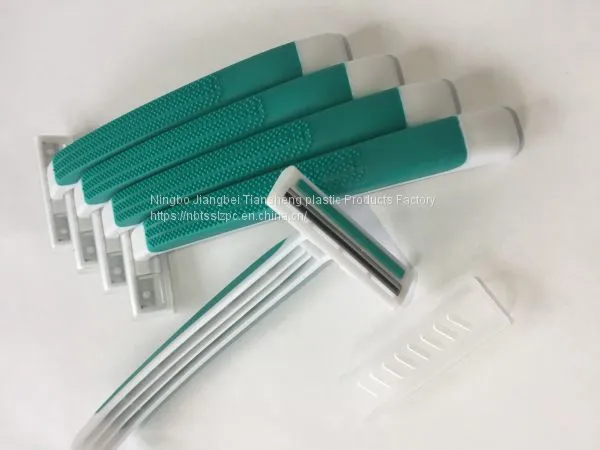
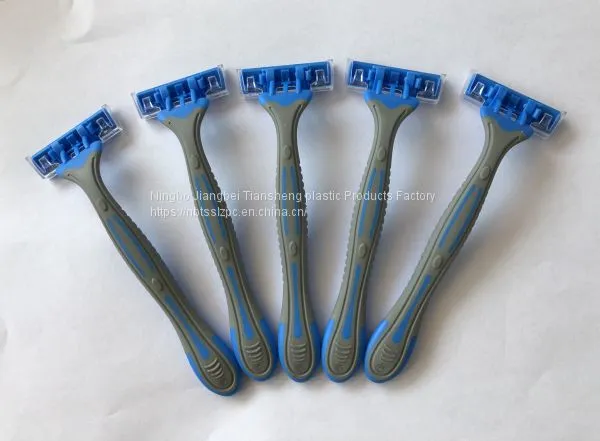
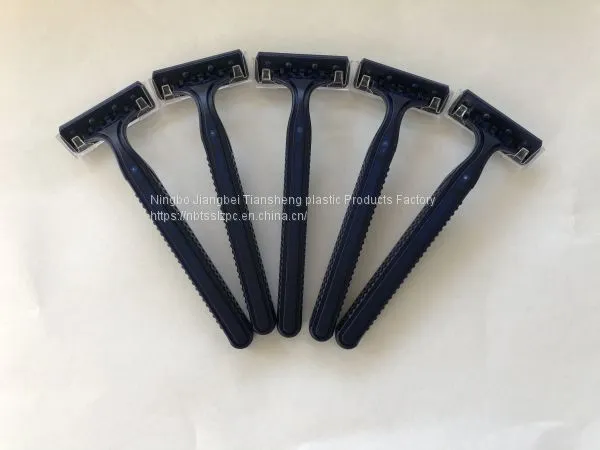
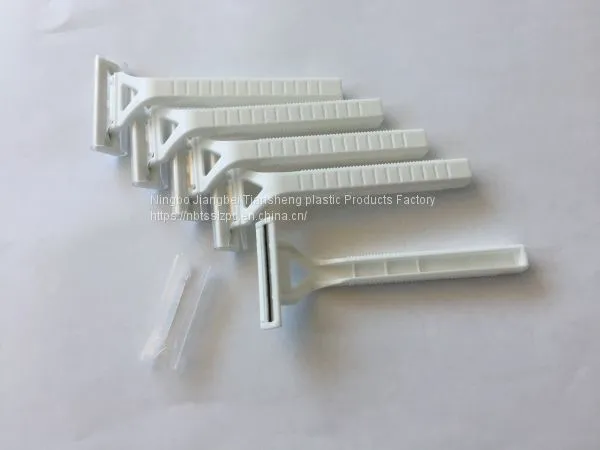
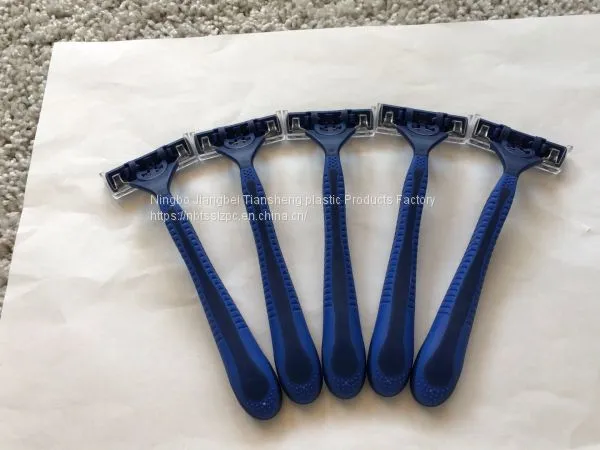
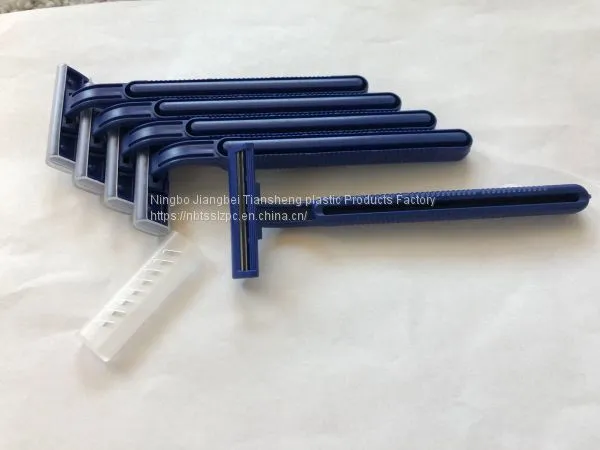
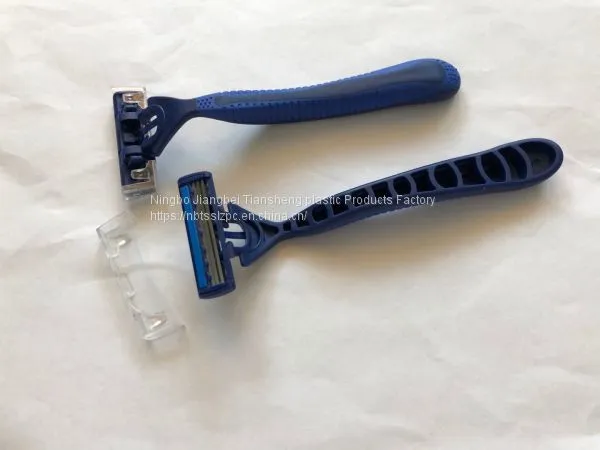
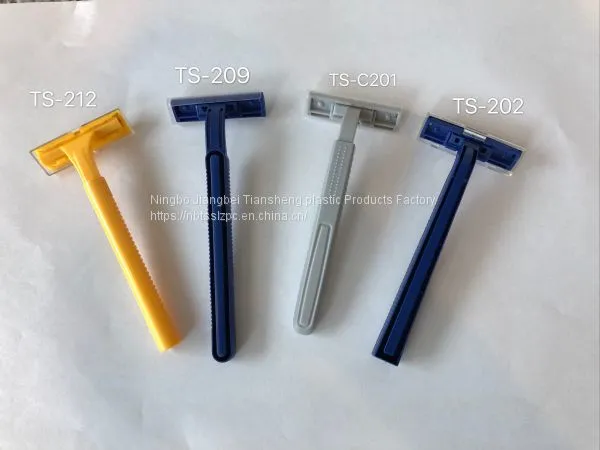
The product range itself covers the full spectrum of the disposable razor category. The following table summarizes the main product configurations available.
| Blade Configuration | Head Type | Handle Options | Typical Applications |
|---|---|---|---|
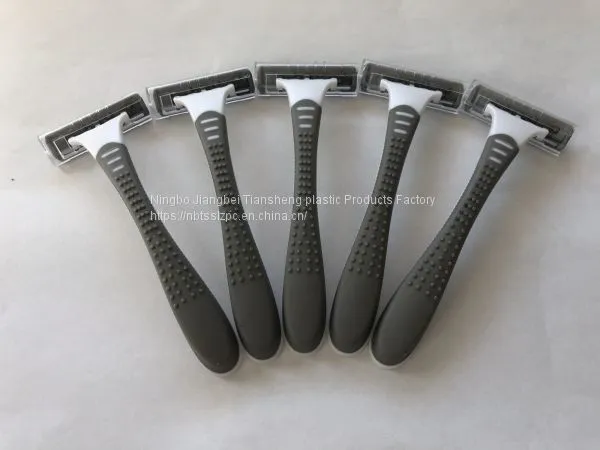
| Single blade | Fixed | PP, rubber-overmold | Institutional supply, budget retail |
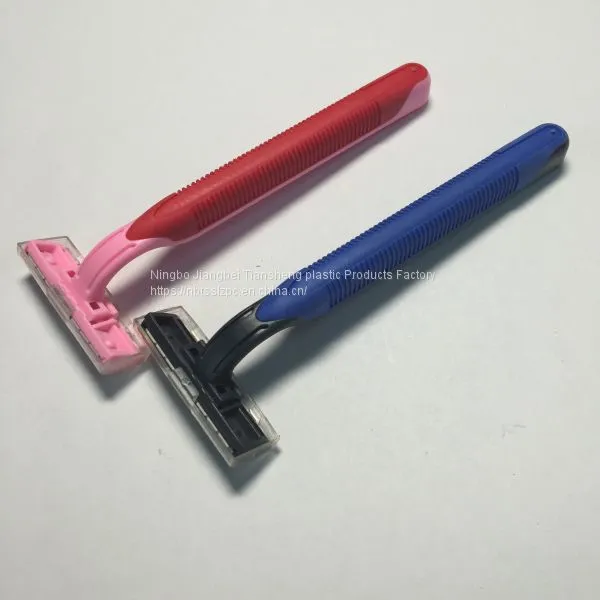
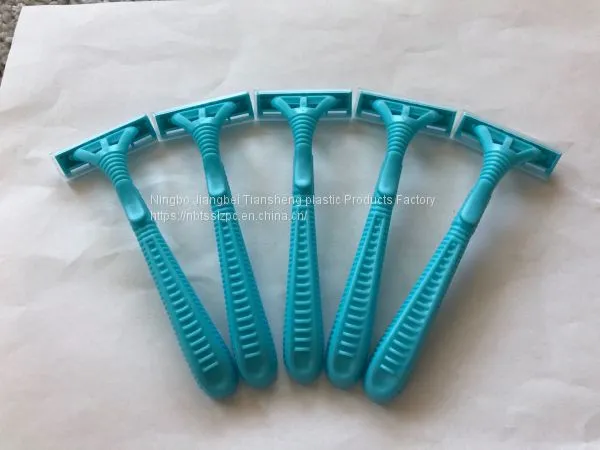
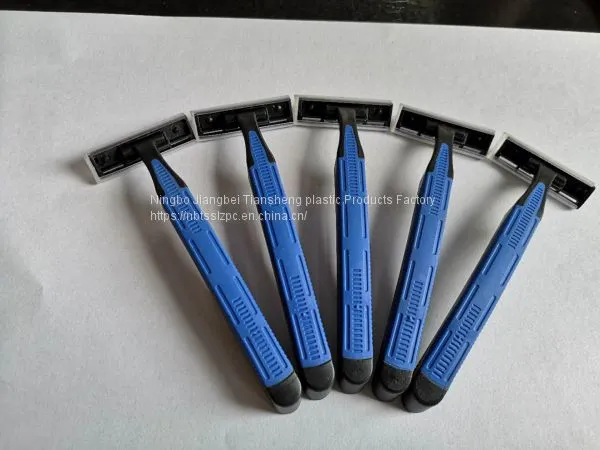
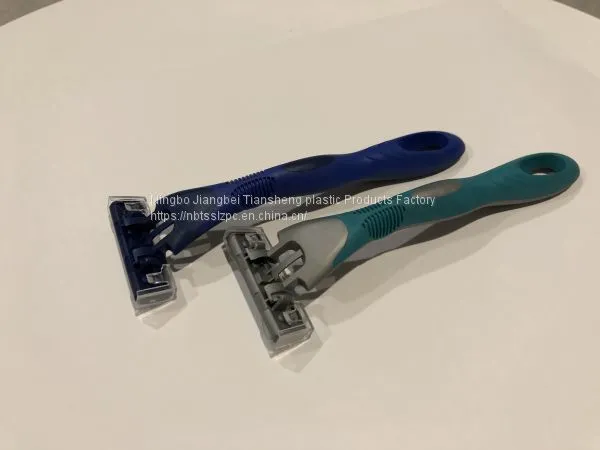
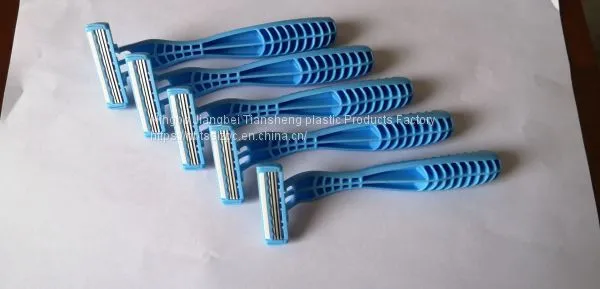
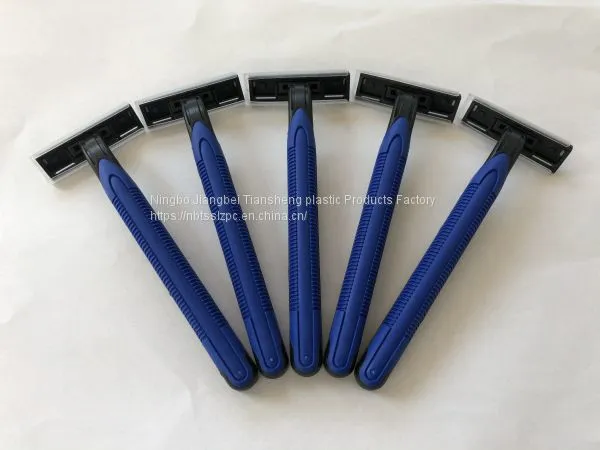
| Twin blade | Fixed or pivoting | PP, rubber-overmold, wheat-straw composite | Hotel amenities, mid-range retail, promotions |
| Triple blade | Fixed or pivoting | PP, rubber-overmold | Premium retail, sensitive-skin segment |
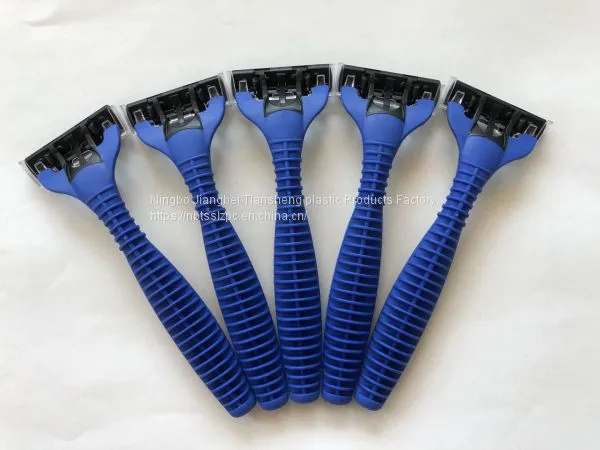
| Four blade | Fixed or pivoting | PP, rubber-overmold | Developed-market retail, cartridge alternatives |
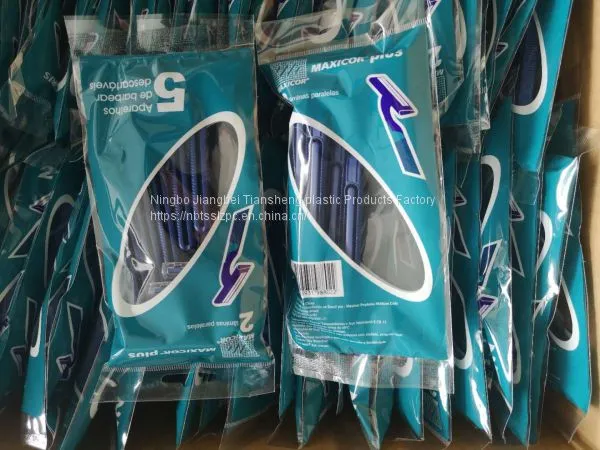
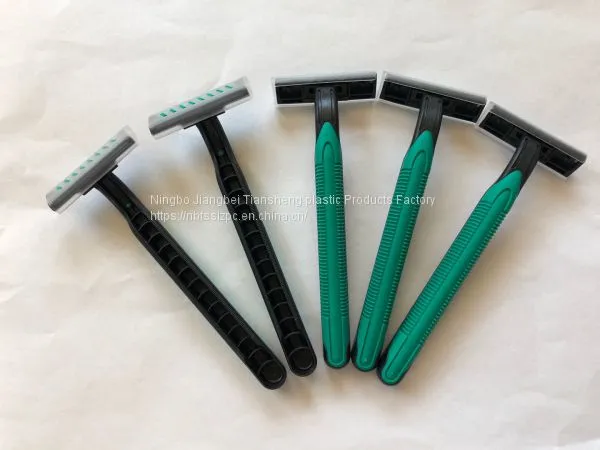
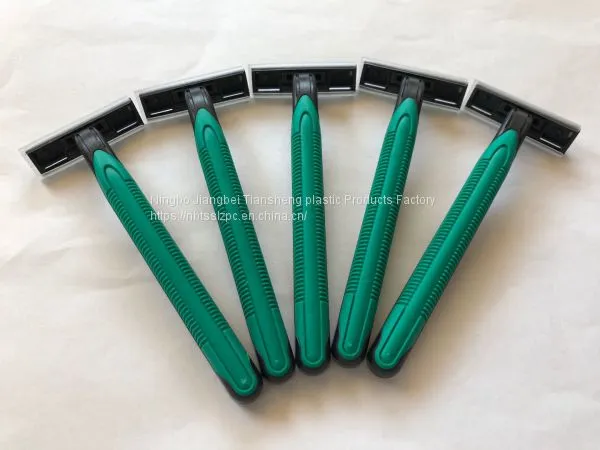
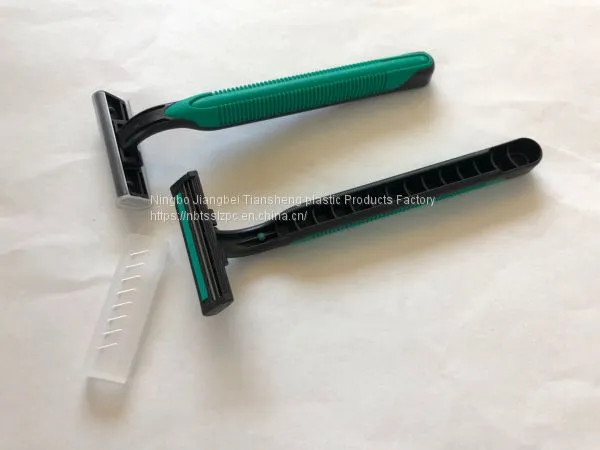
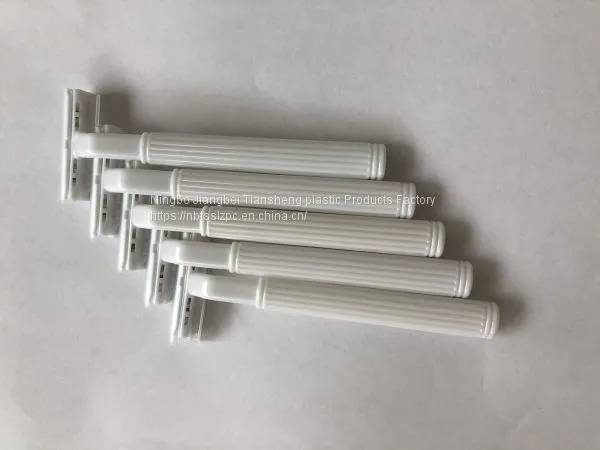
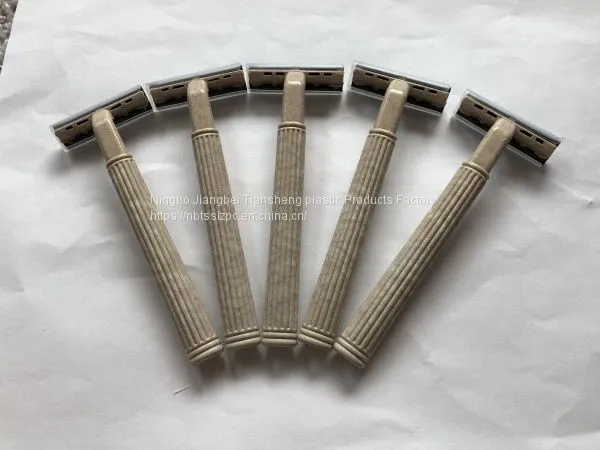
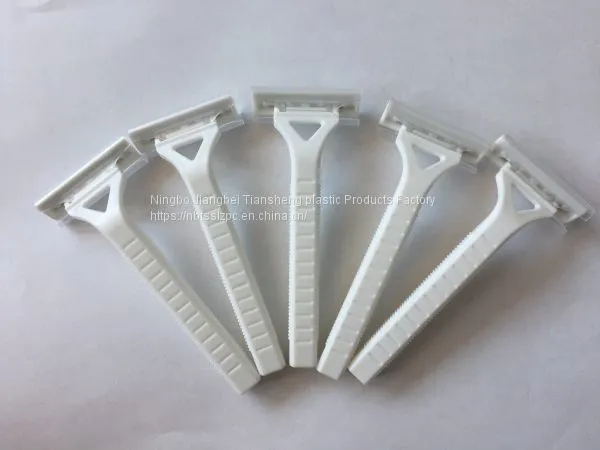
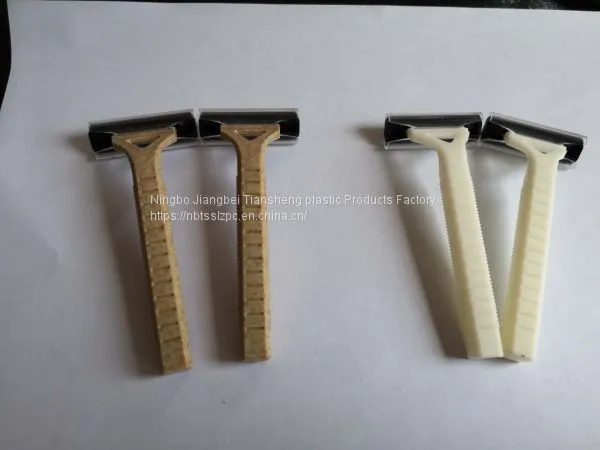
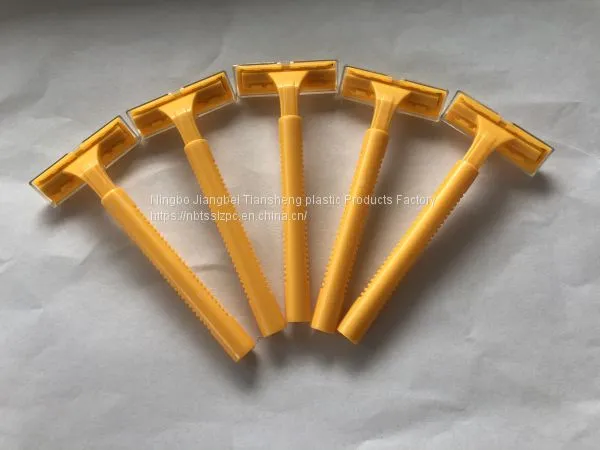
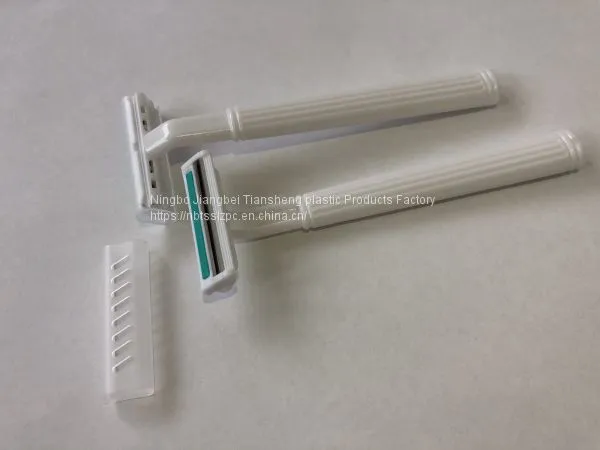
In addition to these standard configurations, the factory produces specialized variants including hotel-grade razors with individually sealed packaging, eco-friendly models with wheat-straw composite handles, and promotional razors with custom handle colors and logo printing. This breadth means that a buyer who starts with one product type can expand into adjacent formats without switching suppliers, maintaining consistent quality standards and a single point of communication.
3. How the Factory Operates: From Raw Material to Finished Product
The production process at Tiansheng follows a structured sequence that has been refined through years of operational experience. Understanding this process helps buyers visualize where their orders fit and what quality controls apply at each stage.
Incoming materials arrive at a dedicated inspection area. Blade steel, typically 420 or 440 series stainless, is checked for grade certification and surface quality. PP and TPE resin batches are verified against supplier specifications. Lubricating strip raw materials, including aloe extract and vitamin E compounds, are tested for purity and composition. Materials that pass incoming inspection move to the production floor. Materials that fail are returned to the supplier before they enter the manufacturing stream.
Injection molding is the first production step. Handle molds run on automated injection machines with cycle times calibrated to produce consistent part dimensions. The molded handles are cooled, trimmed of any flash, and visually inspected for surface defects before moving to assembly. Wheat-straw composite handles follow the same molding process with the additional step of pre-blending the natural fiber with the polymer resin before injection.
Blade preparation runs in parallel with handle molding. Steel strip is fed through grinding stations that shape and sharpen the blade edge to a precise angle, typically in the range of 18 to 22 degrees depending on the razor model. After grinding, the blades receive a PTFE or ceramic coating that reduces friction during shaving. Coated blades are inspected for edge uniformity before being loaded into the assembly feed.
Assembly brings the components together. Blades are inserted into the head housing with precision spacers that maintain consistent gap distances between adjacent blades in multi-blade models. The lubricating strip is bonded to the head surface. The head assembly is then attached to the handle, and the finished razor moves to final inspection. Each of these steps has a defined quality checkpoint, and production staff are trained to flag any deviation from the standard.
4. Quality Control: The Core Operating Principle
The factory's stated principle is that quality determines the life of the business. This is not a marketing slogan. It is an operational decision that manifests in the structure of the production process at every stage.
Quality control at Tiansheng operates at four stages. Incoming material inspection verifies that bought-in components meet specifications before they enter production, covering steel grade certification, resin batch consistency, and lubricating-strip raw-material purity. In-process inspection checks blade alignment, handle-head attachment, and lubricating-strip adhesion at sampling points along the assembly line. Final outgoing inspection examines finished razors for cosmetic defects, packaging integrity, and functional performance on a per-batch sampling basis. Defect tracking logs data from all three inspection stages, and the aggregated data is reviewed monthly to identify patterns that require process adjustment.
The quality team consists of roughly 5 to 10 inspectors dedicated full-time to QC functions rather than splitting time between inspection and production duties. This separation ensures that quality decisions are not influenced by production-speed pressure. The team uses standardized measurement equipment for blade-sharpness testing and calibrated pull-test fixtures for handle-attachment strength verification. Every batch receives a documented inspection report that the buyer can request as part of the shipment documentation.
A practical example illustrates how this system works in real operations. During a production run for a buyer in South America some time ago, the QC team detected that lubricating-strip adhesion fell slightly below the acceptance threshold on roughly 3 percent of units sampled. The batch was held back, the affected units were reworked, and the entire batch was re-inspected before release. The delay was a matter of days. The alternative, shipping razors with substandard strips to a buyer who trusted our quality commitment, would have damaged a relationship that took years to build.
5. Serving Buyers Across the Globe
From its base in Ningbo, Tiansheng Plastic Products ships disposable razors to buyers in a diverse range of markets. The factory's export destinations include North America, South America, Western and Eastern Europe, the Middle East, Africa, Southeast Asia, South Asia, East Asia, Oceania, and Central America. This geographic spread is not the result of a deliberate market-diversification strategy. It is the organic outcome of serving whatever buyers approached the factory with genuine requirements, regardless of where they were located.
The practical benefit of serving many markets is that the factory has accumulated experience with a wide range of regulatory environments, packaging requirements, labeling standards, and cultural expectations around product presentation. A buyer from Northern Europe who requires detailed material-safety documentation and a buyer from West Africa who prioritizes cost-per-unit above packaging frills are both served from the same production floor, and the factory has learned to adapt its output to these different requirements without disrupting the core manufacturing process.
Shipments leave from Ningbo Port or Shanghai Port, both within reasonable trucking distance of the factory. These two ports together handle a substantial share of China's total container exports, which means that vessel availability is high, sailing schedules are frequent, and freight rates are competitive compared to factories located further inland. For time-sensitive orders, air freight is available through Ningbo Lishe International Airport, though most buyers ship by sea given the relatively low value-to-weight ratio of disposable razors.
6. The Team Behind the Product
A factory is defined as much by its people as by its equipment. Tiansheng operates with a total workforce of roughly 11 to 50 people, a scale that places it in the small-to-medium manufacturer category by most definitions. This team size has deliberate implications for how the factory operates.
In a smaller team, individual accountability is more visible. A quality inspector knows that a batch they approve bears their direct responsibility because there are not dozens of inspectors whose signatures blur together in the documentation. A production manager can walk the entire factory floor in minutes and see every workstation. Communication between departments happens face to face rather than through layers of management reporting. These characteristics are not inherently better or worse than a larger organization. They are simply different, and they favor consistency and responsiveness over maximum throughput.
The sales team, consisting of roughly 1 to 10 people, handles buyer inquiries, quotations, order confirmations, and post-shipment follow-up. Because the team is compact, a buyer typically communicates with the same contact person throughout the order cycle rather than being handed off between departments. The sales team's language capabilities cover English, which is the working language for export communication.
The factory's operational philosophy, captured in its founding principle, is that detail determines success or failure. This principle translates into a management approach that prioritizes process consistency over speed, quality verification over assumption, and long-term buyer relationships over transaction-by-transaction optimization. For a buyer evaluating whether to work with this factory, these are the cultural signals that matter more than equipment lists or facility photographs.
7. FAQ
7.1 What types of disposable razors does Tiansheng Plastic Products manufacture?
The factory produces the full range of disposable razor configurations: single-blade, twin-blade, triple-blade, and four-blade models, with fixed or pivoting head designs and a choice of PP, rubber-overmolded, or wheat-straw composite handles. The catalog also includes hotel-grade razors with individual packaging, eco-friendly models with reduced plastic content, and customizable options with logo printing and branded packaging. Buyers can request a full product catalog and sample kit through the factory's GoldSupplier storefront.
7.2 Where is the factory located, and which ports does it ship from?
The factory is located in the Hongtang area of Ningbo's Jiangbei District, Zhejiang province, on China's eastern coast. Shipments depart from Ningbo Port or Shanghai Port, both reachable by truck within a few hours. These two ports offer frequent vessel sailings to destinations worldwide and competitive freight rates due to their scale and the density of shipping services operating from them.
7.3 How does the factory ensure consistent quality across production batches?
Quality control operates at four stages: incoming material inspection, in-process sampling along the assembly line, final outgoing inspection, and ongoing defect-data analysis. The QC team is dedicated full-time to inspection functions and uses standardized measurement equipment for blade-sharpness and handle-attachment testing. Defect data is logged and reviewed monthly to identify trends that require process adjustments, creating a feedback loop that drives continuous improvement rather than relying on end-of-line inspection alone.
Recently Posted
-
Disposable Razors for Hotels: Procurement Guide for Hospitality Buyers
August 14, 2026A mid-range hotel chain in Southeast Asia received a series of guest complaints some time ago. The issue was not the room cleanlin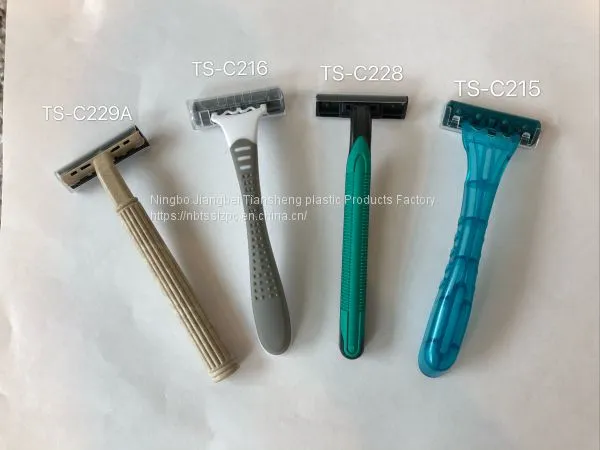 Read More
 -
How to Choose a Disposable Razor Manufacturer in China: A Step-by-Step Guide
August 13, 2026An importer based in South America spent roughly six months sourcing disposable razors from China some time ago. He contacted elev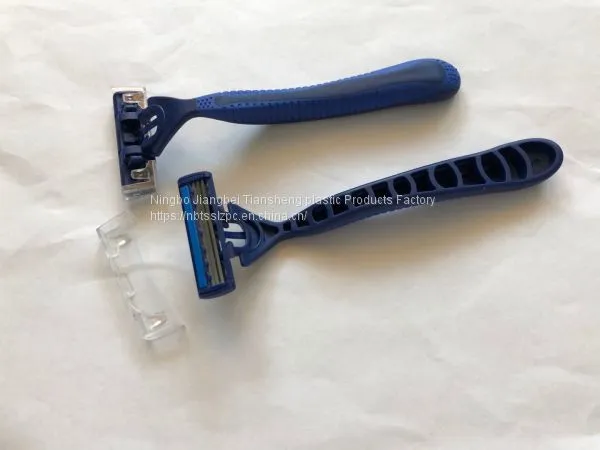 Read More
 -
Single vs Twin Blade Disposable Razors: Which One Fits Your Product Line
August 12, 2026A distributor in West Africa placed two orders with different suppliers some time ago. One order was for single-blade disposable r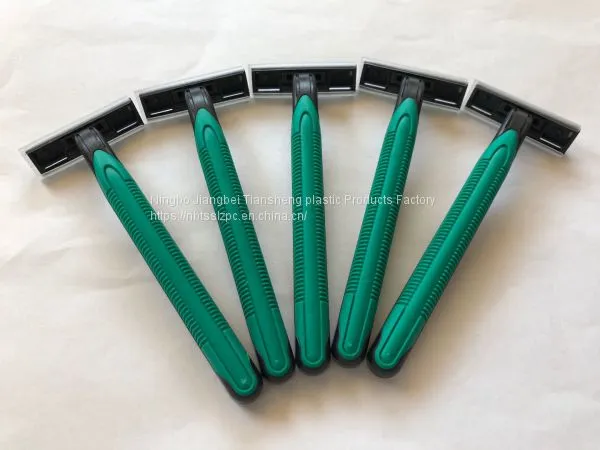 Read More
 -
What Is a Disposable Razor: A Complete Introduction for B2B Buyers
August 11, 2026A distributor in Eastern Europe placed an order for roughly 50,000 disposable razors some time ago. The shipment arrived on schedu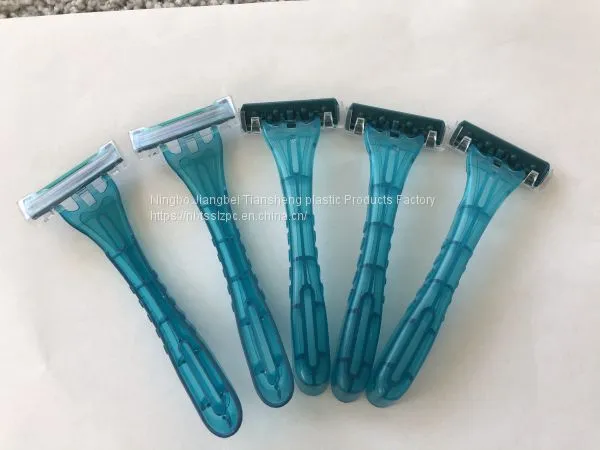 Read More

Contact Us
Recommended Products
-
 TS-C229-A Disposable Razor Male FemaleNegotiableMOQ: 10000 Pieces
 -
TS-C228 Disposable RazorNegotiableMOQ: 10000 Pieces
-
TS-C239 Disposable RazorNegotiableMOQ: 10000 Pieces
-
TS-C205 Disposable Razor With Two BladeNegotiableMOQ: 10000 Pieces
-
TS-C229A Disposable Razor ShaverNegotiableMOQ: 10000 Pieces
-
Disposable RazorNegotiableMOQ: 100 Pieces
-
TS-C216 Disposable Razor Personal CareNegotiableMOQ: 10000 Pieces
-
TS-C228 Disposable Razor ShaverNegotiableMOQ: 10000 Pieces
-
TS-212 Disposable Razor With Two BladeNegotiableMOQ: 10000 Pieces
-
TS-C229-A Eco-Friendly Disposable Shaving Razor Male FemaleNegotiableMOQ: 10000 Pieces
-
TS-C232 Disposable Hotel Shaving RazorNegotiableMOQ: 10000 Pieces
-
TS-C236 Eco-friendly Straw 2 Blade Shavers Wholesale Hotel Disposable RazorNegotiableMOQ: 10000 Pieces
-
TS-C209A Disposable Razor Shaver Four BladeNegotiableMOQ: 10000 Pieces
-
5-pc Disposable Razor ShaverNegotiableMOQ: 10000 Pieces
-
TS-C219 Eco Friendly Safety Wheat Straw Lady Men Hotel Travel Shaver Disposable RazorNegotiableMOQ: 10000 Pieces