
 Business License

Blade Sharpness Standards and Testing Methods for Disposable Razors
A distributor in Africa once switched suppliers to save a fraction of a cent per razor. The new factory's blades looked identical in photos and passed a basic visual inspection, but the first containers drew complaints within weeks. Customers said the razors tugged and irritated, and returns climbed past the level the distributor could absorb.
A sharpness test on the disputed batch showed edge force readings roughly 30 percent worse than the previous supplier's product. The distributor had accepted samples by eye, and the factory had no sharpness data to dispute or confirm the finding.
Blade sharpness is the single quality attribute that most directly determines whether a disposable razor feels good or bad in use, yet it is also the hardest to evaluate from a photograph or a quick hand test. This guide explains how sharpness is defined, how factories measure it, what standards exist, and how buyers can verify it objectively before committing to a production order.
1. What Sharpness Actually Means for a Razor Blade
Sharpness is not a single number; it is a combination of edge geometry and edge quality. The edge angle, the radius of the cutting edge, and the microscopic condition of that edge all determine how easily the blade cuts hair and how comfortably it performs against skin.
Edge angle is the wedge profile ground into the blade. For disposable razor blades, the included angle typically falls between 15 and 20 degrees, and it is a primary factor in cutting efficiency. A steeper angle is more durable but cuts less easily; a shallower angle cuts more easily but dulls faster.
Edge radius matters at the microscopic level. A blade with a sharp, clean edge has a radius measured in fractions of a micrometer. Micro-chipping, burrs, or a rolled edge degrade performance even when the overall geometry looks correct. This is why sharpness must be verified by measurement rather than by appearance alone.
2. The Main Testing Methods
Several methods are used to measure razor blade sharpness, and each answers a slightly different question. The methods below are the ones a buyer is most likely to encounter in factory reports or third-party laboratory results.
Edge force testing measures the force required for the blade to cut a reference medium, such as a standardized synthetic hair or thread. Lower cutting force indicates a sharper blade. This method produces a quantitative result that can be compared across batches and suppliers.
Microscopy examines the edge under high magnification to detect chipping, burrs, and radius variation. It is a qualitative inspection that supports the quantitative tests, and it is the primary tool for diagnosing why a blade performs below standard.
Shave testing uses human testers to rate comfort and closeness on a structured scale. It is the most direct measure of user experience, but it is subjective and expensive to run at scale. Factories use it for product development and validation, while production control relies on the quantitative methods.
| Method | What It Measures | Output | Typical Use |
|---|---|---|---|
| Edge force testing | Cutting resistance on reference medium | Force value in grams or millinewtons | Batch control, supplier comparison |
| Microscopic inspection | Edge chipping, burrs, radius | Imaging and classification | Diagnosis, root cause analysis |
| Shave testing | Comfort and closeness in use | Panel ratings | Development, validation, sample approval |
The table above summarizes how the three methods complement each other. A factory that reports a single type of result, or none at all, gives the buyer less to verify than one that maintains data across all three.
3. Hardness and Its Role in Edge Retention
Sharpness at the moment of production matters, but so does how long the edge keeps that sharpness. Edge retention is driven largely by the hardness of the steel, which is developed through heat treatment before grinding. A blade that feels sharp in the first week but dulls quickly in storage is a hidden cost for the buyer, because the consumer judges the product on its usable life.
Disposable razor blades typically use high-carbon stainless steel hardened to a level that balances edge holding with brittleness. Hardness readings in the range of 500 to 620 HV are common for this category. A blade that is too soft dulls quickly; a blade that is too hard may chip at the edge during grinding or use.
Hardness testing is a routine production check, and the results are recorded by heat treatment batch. Buyers can request hardness data alongside sharpness data, and the combination gives a fuller picture of expected performance than either measurement alone. Together the two readings describe how the blade cuts today and how long it will keep cutting.
4. Standards That Govern Blade Quality
Blade quality is governed by a mix of international standards, national standards, and factory-internal specifications. For disposable razors, the relevant standards typically cover material, safety, and performance characteristics rather than prescribing a single sharpness number.
General manufacturing standards such as ISO 9001 describe the quality management system rather than the product itself. Product-level standards and regulations address material safety, packaging, and labeling. The sharpness acceptance range, by contrast, is usually defined by the factory's own specification or by an agreement between buyer and supplier.
Buyers should ask which standards apply to the product and the factory, and they should confirm that the sharpness specification is documented. A factory that can name its standards and show its internal specification is far easier to audit than one that describes quality in general terms.
5. Acceptance Criteria for Buyers
Sharpness acceptance should be written into the product specification with a defined measurement method and a defined range. Without that, a buyer has no objective basis to reject a batch that performs poorly in the market.
A practical specification reads something like this: edge force on the reference medium shall not exceed a stated maximum, measured on a sample of N blades per batch using the agreed method. The buyer's inspection can then repeat that measurement and compare the results directly.
It is also worth specifying consistency within the batch. A batch where average sharpness is acceptable but the spread is wide will produce mixed user experiences. Defining both the average and the maximum acceptable deviation protects against this.
6. What a Buyer Should Ask the Factory
When evaluating a factory, a buyer should ask direct questions about sharpness control. Does the factory measure sharpness on every production batch? What method does it use? What is the acceptance range, and can the buyer see historical data?
The answers reveal the factory's maturity. A factory that measures sharpness, keeps records, and shares them openly is controlling the attribute that matters most. A factory that responds with vague assurances about quality has likely never measured the attribute in a systematic way. In practice, the buyers who ask these questions at Tiansheng Plastic Products receive a walkthrough of the measurement setup and the acceptance limits before they ever place an order.
At Ningbo Jiangbei Tiansheng Plastic Products Factory, sharpness testing is part of the standard quality flow. The factory maintains its own internal specification, records results by batch, and shares the data with buyers who request it. This practice is one of the reasons the factory's disposable razors perform consistently across repeat orders. Tiansheng Plastic Products treats sharpness data as a buyer-facing document rather than an internal secret, which makes the sourcing conversation concrete from the first quotation.
7. Verifying Sharpness Without a Laboratory
Buyers who cannot access a laboratory can still make meaningful comparisons. A structured shave test with a panel of users, comparing production samples against the approved sample, provides practical feedback that laboratories cannot fully replace.
The shave test should be consistent in its setup. The same facial area, the same preparation, and the same rating scale allow results to be compared across samples. A panel of five to eight users produces a more reliable signal than one person's impression.
For a more objective check, some buyers arrange for a third-party laboratory to run edge force testing on samples from the pre-production and production stages. The cost is modest, and the result provides a documented baseline that both parties can reference.
8. How Sharpness Data Improves Negotiation and Sourcing
Sharpness data changes the dynamic of supplier evaluation. When a buyer can compare edge force readings across factories, the comparison is no longer based on price and appearance alone. A factory with documented sharpness control can justify a slightly higher unit price, and a buyer can make a sourcing decision on measurable grounds.
The data also protects the buyer in disputes. If a batch underperforms in the market, the sharpness records and the inspection results establish whether the product met the agreed specification. This is the difference between a resolvable quality claim and an unresolvable argument. Ningbo Jiangbei Tiansheng Plastic Products, for example, provides batch-level sharpness records on request, so a buyer investigating a market complaint can confirm within hours whether the disputed batch conformed to specification.
For buyers building long-term programs, requesting sharpness data on every order builds a quality history. Trends across orders reveal whether the factory is holding its standard or drifting, and they provide an early signal to intervene before a small drift becomes a market problem.
9. Frequently Asked Questions
9.1 Can blade sharpness be tested without special equipment?
Basic comparisons can be made without laboratory equipment, but they are subjective. A structured shave test comparing production samples against the approved sample gives practical feedback on comfort and closeness. Simple edge checks such as carefully sliding the blade across a fingernail or a reference surface can reveal gross dullness but cannot detect the small differences that matter most.
For an objective and documented result, edge force testing requires dedicated equipment. Buyers who need measurable data for contracts and inspections should request factory records or arrange third-party laboratory testing.
9.2 What is a normal sharpness range for a disposable razor blade?
There is no single universal number because the measurement method, the reference medium, and the blade geometry all affect the reading. A factory that measures edge force on a defined reference medium will have its own acceptance range, typically expressed as a maximum cutting force per blade. The meaningful question for a buyer is not what range is normal across the industry, but what range the supplier commits to and whether it verifies that range on every batch. The supplier's internal specification, shared with the buyer, is the document that makes the acceptance criterion enforceable.
9.3 Do more blades mean sharper blades?
No. Blade count and blade sharpness are independent attributes. A twin-blade razor with well-controlled edge quality can outperform a triple-blade razor with poor grinding. Sharpness is determined by steel grade, heat treatment, grinding geometry, and edge finishing, not by how many blades sit in the head.
Buyers evaluating multi-blade formats should request sharpness data for the specific model rather than assuming that a higher blade count implies better cutting performance. The two dimensions address different aspects of the shaving experience.
9.4 How often should a factory test sharpness during production?
Most professional factories test sharpness at defined intervals during production and on every finished batch. In-process testing samples blades at the grinding station at regular intervals to catch drift early, and final testing verifies the packaged product before release. The frequency depends on the factory's process stability and its quality system.
Buyers should ask how often testing occurs and whether the records are available for review. A factory that tests at every shift change and logs the results is controlling the process; one that reacts after a problem appears is preventing nothing at all.
Recently Posted
-
Quality Control in Disposable Razor Manufacturing
September 4, 2026A private-label buyer once accepted a large production run based on a favorable sample and a competitive quotation. The first cont Read More
 -
Travel-Size Disposable Razors for Airlines and Travel Retail
September 4, 2026A regional airline once sourced its onboard grooming kits from three different suppliers to keep costs low. Each kit included a co Read More
 -
Twin vs Triple Blade Disposable Razors: Cost, Performance, and Demand
September 3, 2026Not long ago, a European retail buyer placed a trial order for a triple-blade disposable razor because a competitor's premium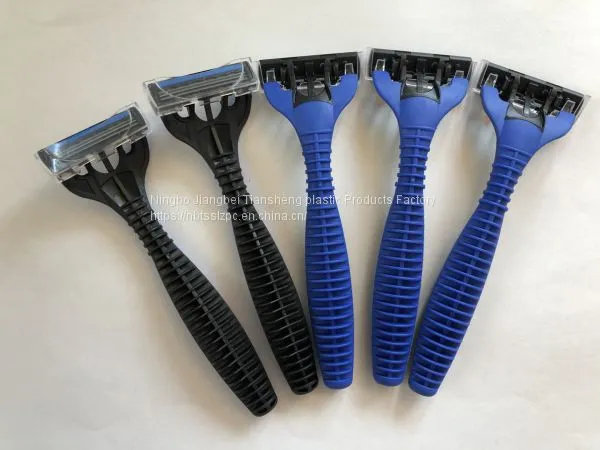 Read More
 -
How Disposable Razors Are Made: A Complete Manufacturing Guide
September 2, 2026A few seasons ago, a distributor in Southeast Asia received a container of disposable razors that looked correct from the outside.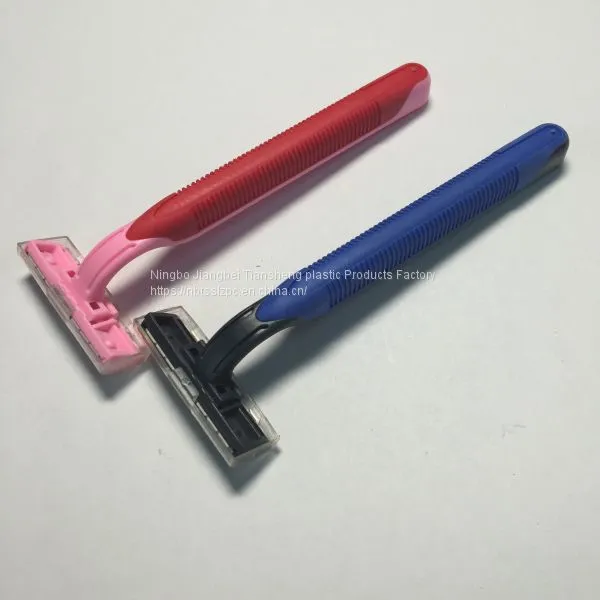 Read More

Contact Us
Recommended Products
-
 TS-C229-A Disposable Razor Male FemaleNegotiableMOQ: 10000 Pieces
 -
TS-C228 Disposable RazorNegotiableMOQ: 10000 Pieces
-
TS-C239 Disposable RazorNegotiableMOQ: 10000 Pieces
-
TS-C205 Disposable Razor With Two BladeNegotiableMOQ: 10000 Pieces
-
TS-C229A Disposable Razor ShaverNegotiableMOQ: 10000 Pieces
-
Disposable RazorNegotiableMOQ: 100 Pieces
-
TS-C216 Disposable Razor Personal CareNegotiableMOQ: 10000 Pieces
-
TS-C228 Disposable Razor ShaverNegotiableMOQ: 10000 Pieces
-
TS-212 Disposable Razor With Two BladeNegotiableMOQ: 10000 Pieces
-
TS-C229-A Eco-Friendly Disposable Shaving Razor Male FemaleNegotiableMOQ: 10000 Pieces
-
TS-C232 Disposable Hotel Shaving RazorNegotiableMOQ: 10000 Pieces
-
TS-C236 Eco-friendly Straw 2 Blade Shavers Wholesale Hotel Disposable RazorNegotiableMOQ: 10000 Pieces
-
TS-C209A Disposable Razor Shaver Four BladeNegotiableMOQ: 10000 Pieces
-
5-pc Disposable Razor ShaverNegotiableMOQ: 10000 Pieces
-
TS-C219 Eco Friendly Safety Wheat Straw Lady Men Hotel Travel Shaver Disposable RazorNegotiableMOQ: 10000 Pieces