
 Business License

Travel-Size Disposable Razors for Airlines and Travel Retail
A regional airline once sourced its onboard grooming kits from three different suppliers to keep costs low. Each kit included a compact disposable razor, but the three razors came from different factories with different blade standards and different packaging formats. Passengers complained about the inconsistency, cabin crew struggled to restock because the kits were not uniform, and the airline's procurement team spent two seasons untangling quality disputes with three vendors. When the airline finally consolidated the razor supply with a single factory, the unit cost dropped by roughly 15 percent and the complaints stopped.
Travel-size disposable razors are a specialized procurement category. They serve airlines, duty-free operators, hotels with transit programs, and travel retail chains, and each buyer faces its own constraints around packaging dimensions, weight, compliance, and supply timing. This guide explains how the category works and what buyers should verify before placing an order.
1. The Travel-Size Format: What Makes It Different
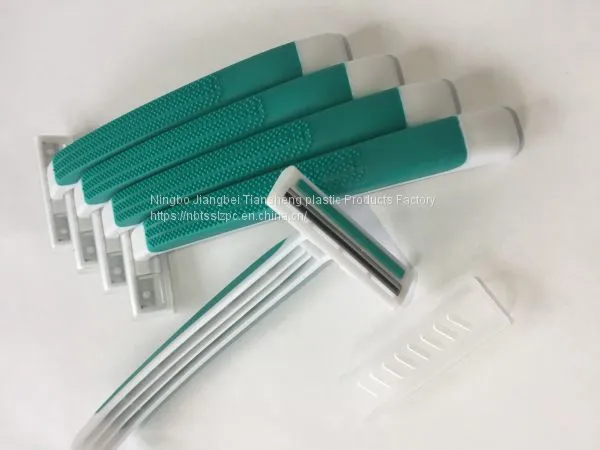
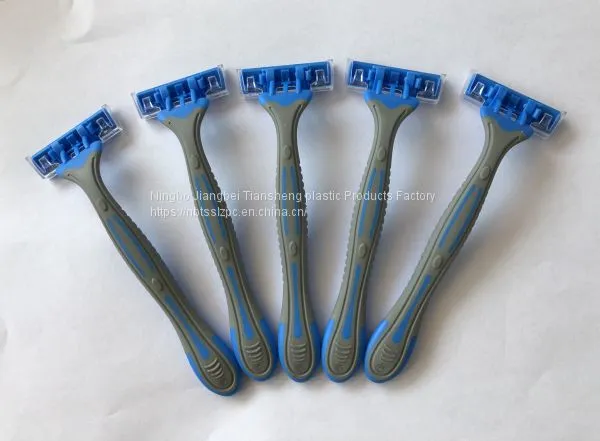
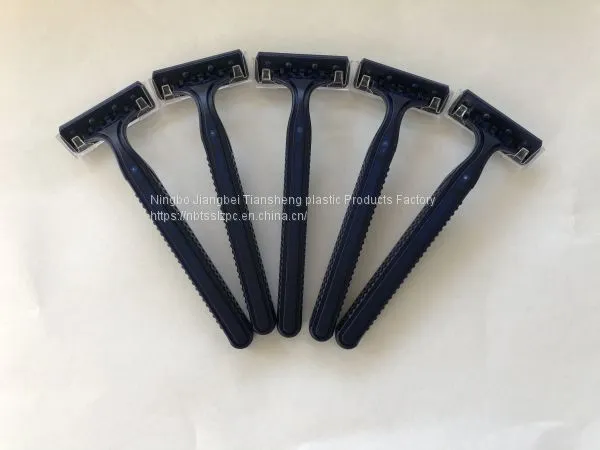
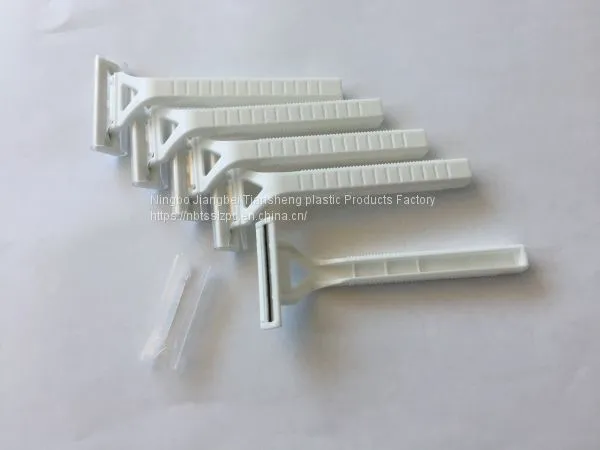
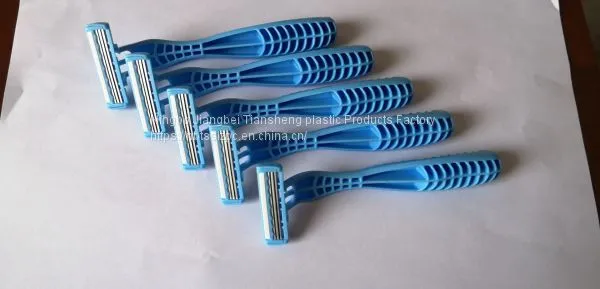
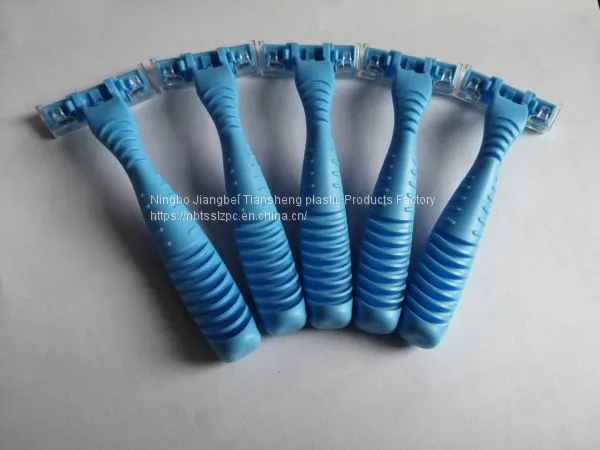
A travel-size disposable razor is a compact variant designed for onboard kits, amenity packs, and retail counter displays. The handle is typically shorter, the packaging is lighter, and the overall footprint is designed to fit within small compartments or sealed kits.
Weight matters more in this category than in standard retail. Every gram added to an onboard amenity kit affects fuel burn across the airline's fleet, so procurement teams evaluate razor weight alongside unit price. A typical travel-size twin-blade razor with packaging weighs roughly 8 to 12 grams, and buyers track this number as a specification.
The format also carries compliance implications. Razors intended for cabin distribution must satisfy aviation security rules, which in practice means the blade must be safely enclosed and the product must not raise screening flags during airport handling. Suppliers serving this category document these characteristics explicitly.
2. Airline Amenity Kits: Volume and Specification
Airline amenity kits are the largest institutional buyer of travel-size razors. A long-haul carrier operating a fleet of 50 wide-body aircraft can distribute hundreds of thousands of kits per year, and razors are among the most frequently consumed items within them.
Specifications for airline razors tend to be precise. Buyers specify blade count, handle length, packaging format, and often the color of the packaging to match the airline's brand palette. The razor must also perform reliably in a sealed kit that may sit in storage for extended periods before reaching a passenger.
Demand fluctuates with the route network. A carrier that expands long-haul routes or adds premium cabins increases its amenity consumption accordingly, while regional operations with shorter flights consume fewer kits per aircraft. Procurement teams model this demand from schedule data, and they adjust razor volumes quarter by quarter rather than locking a single annual figure.
Supply timing is a recurring challenge. Airlines plan amenity procurement around seasonal schedules and route expansions, and orders are often placed months in advance. A factory that can commit to a production slot and hold to the schedule reduces the buyer's risk of stock-outs during peak travel periods.
3. Duty-Free and Travel Retail: Presentation Matters
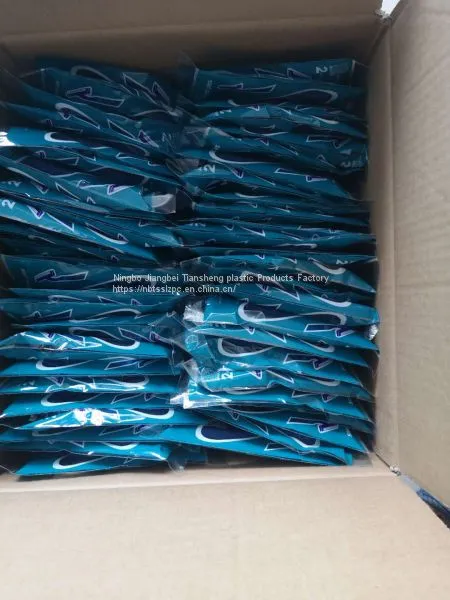
Duty-free and travel retail channels treat the razor as a shelf product rather than a giveaway. The packaging must look premium enough to justify the price point, which usually means a printed card or a compact box rather than a plain polybag.
Branding plays a larger role in this channel. Travel retail buyers often run private-label programs, so the factory must handle custom printing, logo application, and packaging variants cleanly. Color accuracy and print registration are checked against an approved proof before mass production, and repeat orders must reproduce the approved appearance.
Price points in travel retail sit well above institutional pricing. The same twin-blade razor that costs a few cents in bulk amenity supply can carry a retail price several times higher in a duty-free display, which makes margin protection a matter of packaging and presentation rather than product cost.
Seasonal peaks shape the buying calendar in this channel. Travel retail operators typically refresh their assortments ahead of the northern summer and year-end holiday windows, and buyers place their production orders in advance of those peaks. A factory with flexible capacity can accommodate these waves, while a fully booked line may force the buyer to accept longer lead times.
Private-label demand in travel retail has grown steadily as operators seek differentiation. Rather than stocking generic products, many duty-free chains now run their own branded grooming lines, which turns the factory into a full private-label partner handling product, packaging, and compliance in one program.
4. Packaging Options for the Travel Channel
Packaging for travel-size razors falls into three main formats, and the choice affects cost, presentation, and compliance. The following table compares the options a buyer typically evaluates.
| Format | Typical Use | Cost per Unit | Presentation |
|---|---|---|---|
| Sealed polybag with header | Airline bulk amenity supply | Lowest | Functional, minimal |
| Individual polybag in kit | Pre-packed amenity kits | Low | Uniform inside kit |
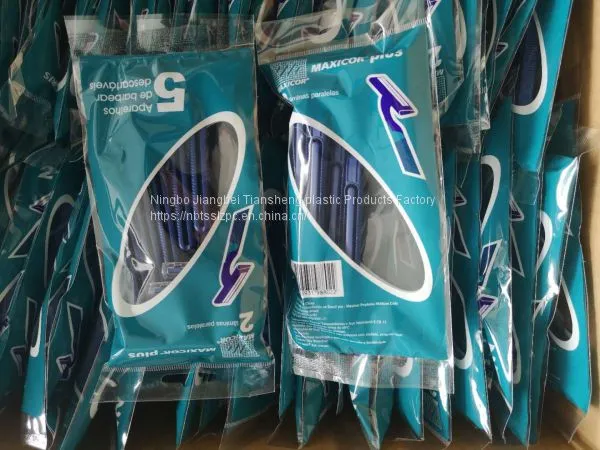
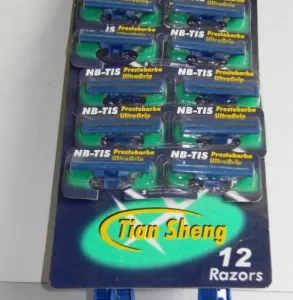
| Printed blister card | Duty-free and travel retail | Moderate | Branded, shelf-ready |
| Compact folding box | Premium travel retail lines | Higher | Gift-like presentation |
The table above shows that packaging cost rises in step with presentation requirements. A buyer serving both amenity supply and travel retail will often run the same razor in two packaging formats to serve two channels without duplicating production.
5. Compliance and Safety Documentation
Aviation and customs compliance is a distinct workstream for travel-channel razors. Suppliers must provide documentation that confirms the blade is safely enclosed, the packaging meets airline handling standards, and the product description matches customs declarations for each destination market.
Buyers should request the compliance documentation before production rather than at shipment. This includes the product specification sheet, material declarations for the handle and blade, and packaging weight data. For markets with stricter import rules, a certificate or declaration for the steel grade and plastic materials may be required.
In our experience at Ningbo Jiangbei Tiansheng Plastic Products Factory, buyers who request this documentation at the quotation stage complete their customs clearance faster and avoid surprises at the port. The factory maintains standard compliance files for its travel-size range and can tailor declarations to the buyer's destination markets. Destinations with stricter import regimes, including several markets in the Middle East and Southeast Asia, reward this preparation with smoother port processing.
6. Order Volume and Replenishment Planning
Travel-channel orders vary widely by buyer type. A regional airline may order 50,000 to 200,000 razors per quarter, while a duty-free operator might order smaller volumes with higher packaging specifications and more frequent replenishment.
Replenishment planning depends on consumption rates that are hard to predict in a recovering travel market. Airlines often protect against uncertainty with a rolling forecast: a firm order for the near term plus an estimated volume for the following quarter, adjusted as booking data comes in.
Factories support this pattern with scheduled production slots. Ningbo Jiangbei Tiansheng Plastic Products Factory works with travel buyers on this basis, holding capacity for follow-on orders within an agreed window. This reduces the buyer's inventory carrying cost while protecting supply continuity.
7. Quality Checks for Travel-Size Razors
The quality parameters for travel-size razors mirror standard disposable razors, with a few category-specific additions. Blade sharpness and alignment remain the core checks, and the compact head geometry makes alignment tolerances tighter than in full-size formats.
Packaging integrity is weighted more heavily in this category. A razor that shifts inside its kit, a seal that breaks in transit, or a card that scuffs in the display all create negative impressions in a premium travel environment. Inspection checks packaging condition as well as the razor itself.
The product also travels through airport logistics and cabin service, where handling is rougher than typical retail distribution. Cartons are stacked, kits are repacked, and individual units move through several hands before reaching the passenger, so seal strength and carton compression resistance are verified during outgoing inspection at the factory.
Consistency across batches is the practical concern for airlines. Because kits are restocked continuously, passengers across different routes and seasons should receive an identical product. Buyers verify this by retaining reference samples from the first order and comparing subsequent batches against them at inspection. Tiansheng Plastic Products supports this practice by keeping production records and sample references for each order, so repeat buyers can confirm that a new batch matches the approved standard.
8. Sourcing Strategy for Travel Buyers
Consolidating travel-size razor supply with a single factory simplifies the category. One factory can provide the amenity-grade razor, the retail-grade packaging, the compliance documentation, and the replenishment flexibility that a travel buyer needs, which eliminates the coordination cost of managing multiple vendors. The saving is not limited to purchase price; fewer vendors mean fewer document sets, fewer inspection schedules, and fewer points of failure when a program changes.
When evaluating a factory for this category, buyers should ask three questions. First, can the factory produce both polybag and printed packaging from the same product line? Second, does it maintain compliance files for aviation and customs use? Third, can it commit to scheduled production slots for rolling replenishment?
Tiansheng Plastic Products answers yes to all three and has supplied travel-size formats to hotel, airline, and retail programs across multiple markets. The factory's combination of full-line production and packaging flexibility makes it a practical partner for buyers who want one supplier across the travel channel.
9. Frequently Asked Questions
9.1 Are disposable razors allowed in airline amenity kits?
Yes, disposable razors are commonly included in airline amenity kits, and aviation security rules permit them when the blade is safely enclosed. The razor must remain within its packaging, and the kit itself is distributed to passengers onboard rather than carried by passengers through security screening. Suppliers serving this channel document the packaging and enclosure characteristics so the airline can confirm compliance with its own procedures. Buyers should request this documentation during sourcing rather than assuming that any disposable razor automatically qualifies.
9.2 How much does a travel-size razor weigh?
A typical travel-size twin-blade razor with its packaging weighs roughly 8 to 12 grams, depending on handle length, blade count, and packaging format. A bare razor without packaging weighs less, but buyers usually specify the packaged weight because that is the figure that affects kit weight and fuel planning. Weight is a tracked specification in airline procurement, and suppliers can adjust handle design and packaging to meet a target weight if the buyer's requirement is outside the standard range.
9.3 What is the typical minimum order for travel-size razors?
Minimum order quantities for standard travel-size razors typically start around 10,000 to 30,000 units, depending on the factory and the packaging format. Standard polybag formats allow smaller minimums, while printed packaging and custom branding push the minimum higher because printed materials have their own setup costs. A buyer running an unprinted amenity program can often start with a smaller trial quantity, whereas a branded duty-free line usually needs a larger first run to make the tooling and printing economical. Quotations from the factory will state the minimum for the specific format and packaging, so buyers should confirm this number early in the sourcing process rather than assuming a universal threshold.
9.4 How far in advance should an airline place a razor order?
Airlines and travel retail buyers typically place orders 8 to 12 weeks before the required delivery date, which allows for production, inspection, and sea freight. Standard production runs 15 to 30 days, and transit time to most international destinations adds another 20 to 35 days by sea. Buyers with fixed seasonal launch dates should add a buffer for customs clearance and any packaging approvals, which can add a week or more in some destinations. Rolling replenishment programs that hold a scheduled production slot can shorten the effective lead time for follow-on orders, because the factory has already reserved capacity and the packaging artwork is already approved.
Recently Posted
-
Quality Control in Disposable Razor Manufacturing
September 4, 2026A private-label buyer once accepted a large production run based on a favorable sample and a competitive quotation. The first cont Read More
 -
Blade Sharpness Standards and Testing Methods for Disposable Razors
September 3, 2026A distributor in Africa once switched suppliers to save a fraction of a cent per razor. The new factory's blades looked identi Read More
 -
Twin vs Triple Blade Disposable Razors: Cost, Performance, and Demand
September 3, 2026Not long ago, a European retail buyer placed a trial order for a triple-blade disposable razor because a competitor's premium Read More
 -
How Disposable Razors Are Made: A Complete Manufacturing Guide
September 2, 2026A few seasons ago, a distributor in Southeast Asia received a container of disposable razors that looked correct from the outside.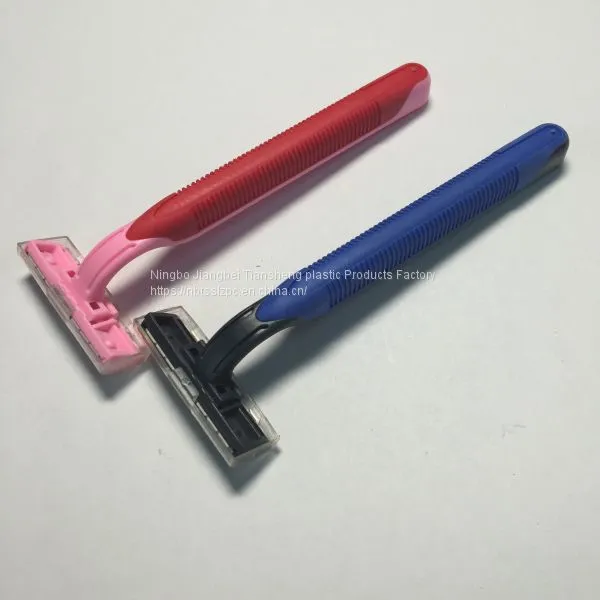 Read More

Contact Us
Recommended Products
-
 TS-C229-A Disposable Razor Male FemaleNegotiableMOQ: 10000 Pieces
 -
TS-C228 Disposable RazorNegotiableMOQ: 10000 Pieces
-
TS-C239 Disposable RazorNegotiableMOQ: 10000 Pieces
-
TS-C205 Disposable Razor With Two BladeNegotiableMOQ: 10000 Pieces
-
TS-C229A Disposable Razor ShaverNegotiableMOQ: 10000 Pieces

-
Disposable RazorNegotiableMOQ: 100 Pieces
-
TS-C216 Disposable Razor Personal CareNegotiableMOQ: 10000 Pieces
-
TS-C228 Disposable Razor ShaverNegotiableMOQ: 10000 Pieces
-
TS-212 Disposable Razor With Two BladeNegotiableMOQ: 10000 Pieces
-
TS-C229-A Eco-Friendly Disposable Shaving Razor Male FemaleNegotiableMOQ: 10000 Pieces
-
TS-C232 Disposable Hotel Shaving RazorNegotiableMOQ: 10000 Pieces
-
TS-C236 Eco-friendly Straw 2 Blade Shavers Wholesale Hotel Disposable RazorNegotiableMOQ: 10000 Pieces
-
TS-C209A Disposable Razor Shaver Four BladeNegotiableMOQ: 10000 Pieces
-
5-pc Disposable Razor ShaverNegotiableMOQ: 10000 Pieces
-
TS-C219 Eco Friendly Safety Wheat Straw Lady Men Hotel Travel Shaver Disposable RazorNegotiableMOQ: 10000 Pieces